Bing Crosby appears as one of the "Rhythm Boys" with Paul Whiteman, the "King of Jazz"
October 2 - 8, 1927 / June 2, 1928
Photo Credit: October 2, 1927
 Back
Back
From 1926 through the 1960's, Shea’s Buffalo Theatre thrived as a cultural landmark, hosting Hollywood premieres and local events as part of the iconic 'Wonder Theatre' era.
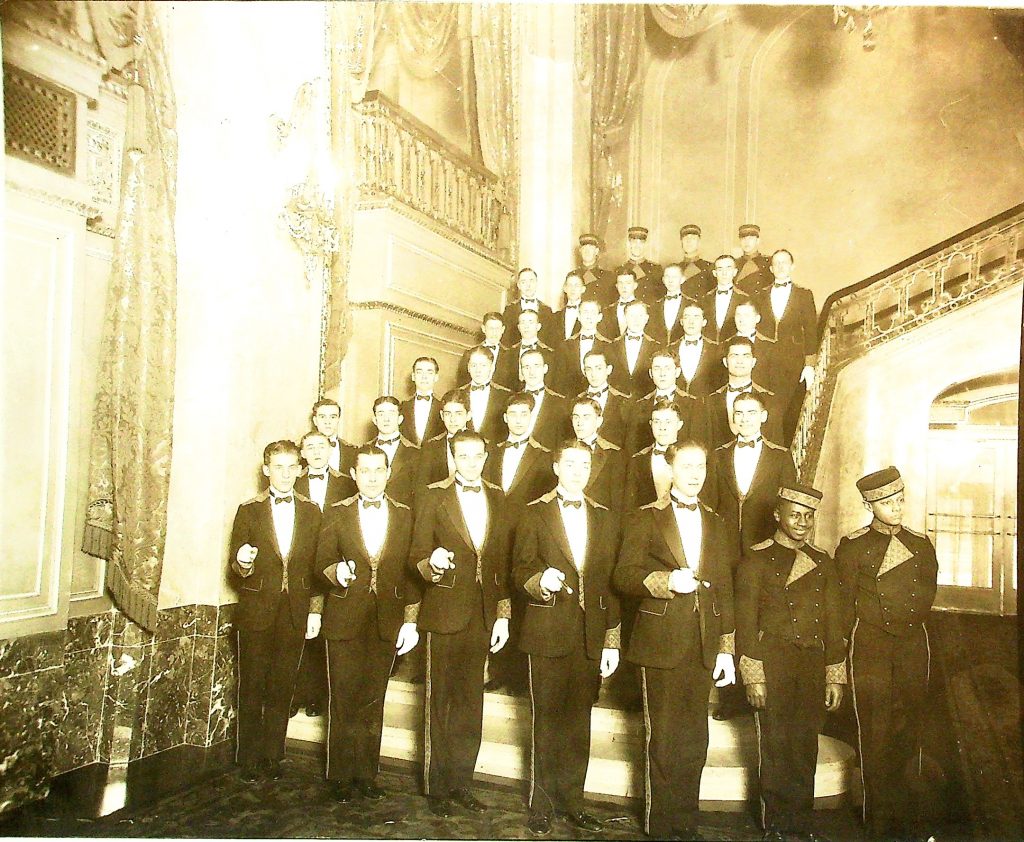
Photo Credit: The Buffalo Courier - January 17, 1926
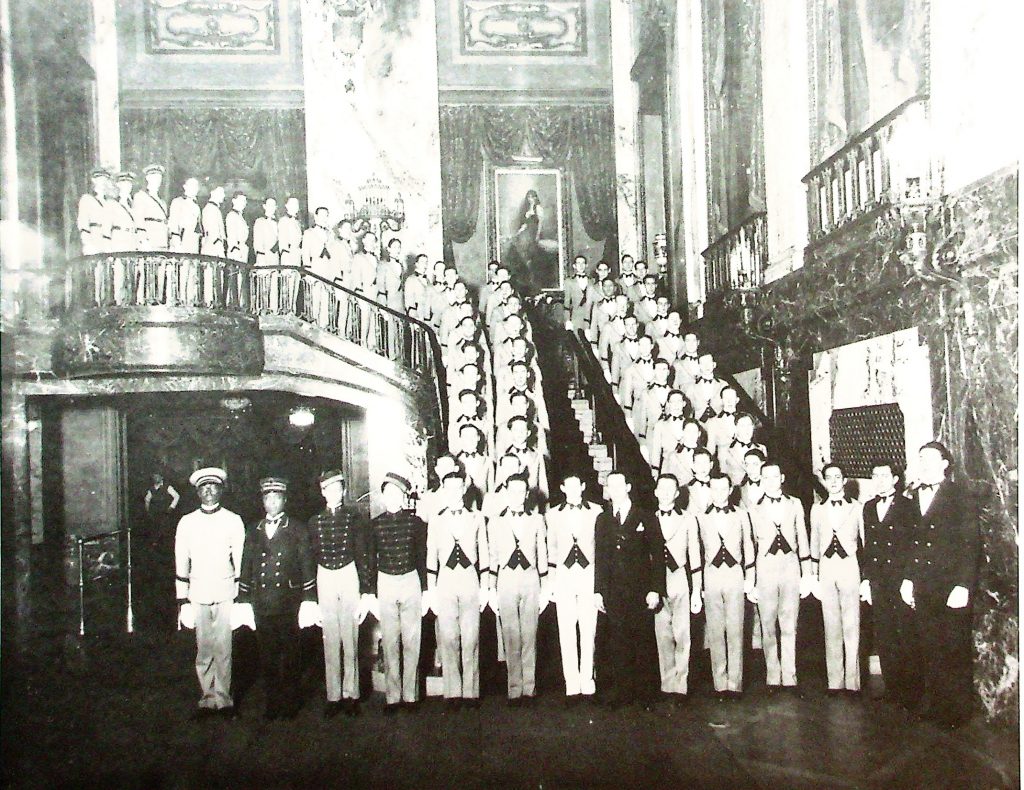
"This usher system was the cause of universal comment at the Friday private opening. All the employees were either in full dress semi-military uniform, or else in formal full dress, and they make an imposing array. Like soldiers they stand at their posts, answering all questions in subdued voice and quickly pointing the way with their silver-topped canes. They are marvels of fast, yet courteous efficiency, and they succeed in impressing their patrons."
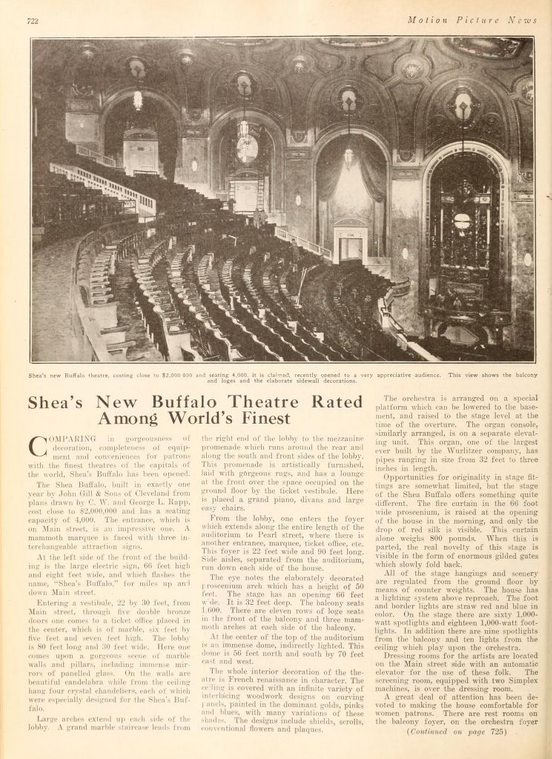
Photo Credit: Motion Picture News - February 1926
Photo Credit: The Buffalo Times - February 7, 1926
Photo Credit: The Buffalo Times - February 7, 1926
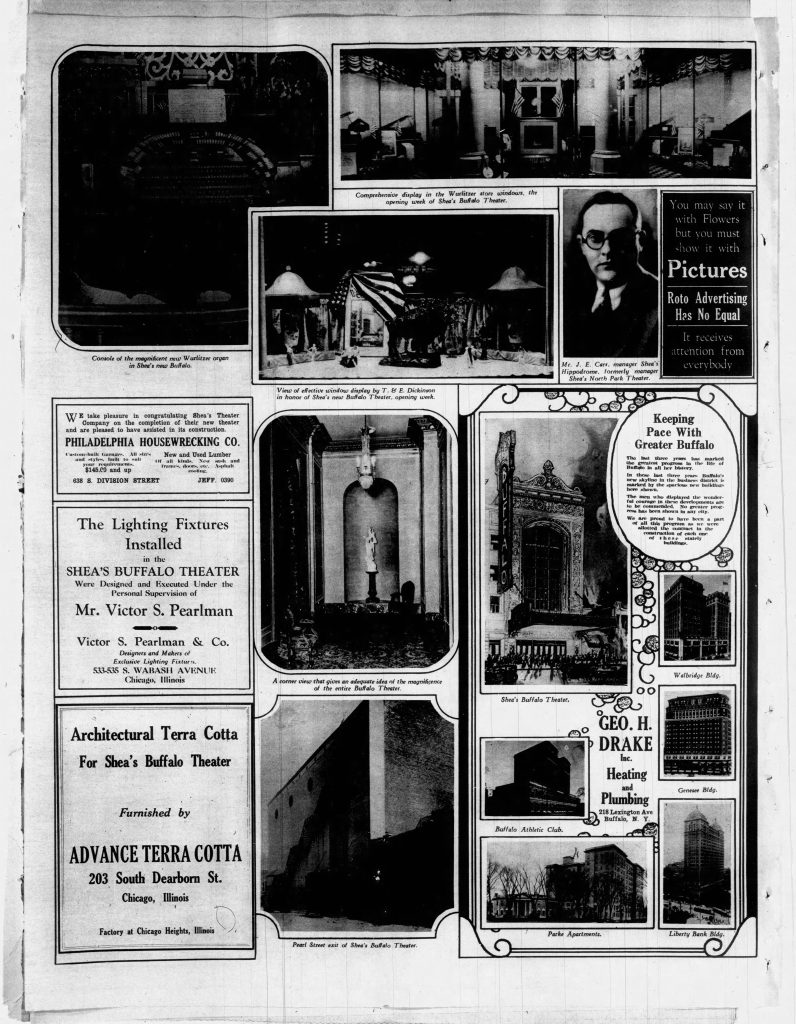
Photo Credit: The Buffalo Times - February 7, 1926
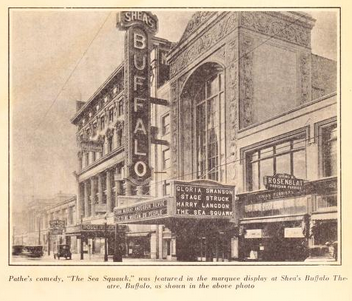
Photo Credit: Motion Picture News - June 26, 1926
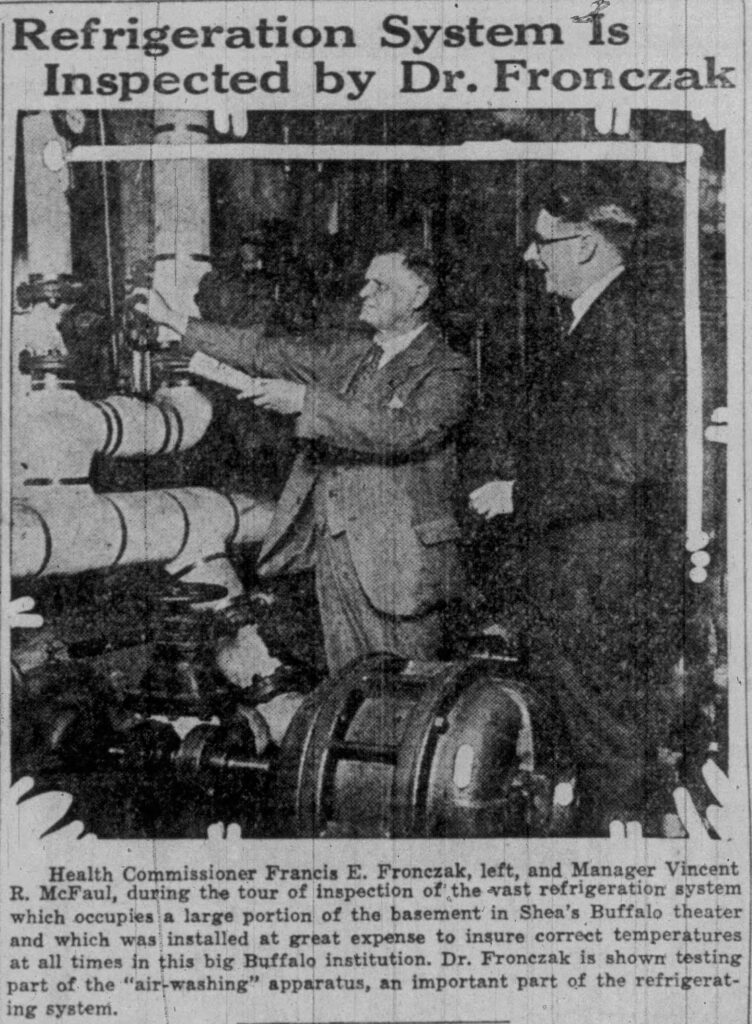
Photo Credit: The Buffalo Courier-Express - July 11, 1926
Health Commissioner Francis E. Fronczak wrote a letter to Michael Shea, praising his installation of the refrigeration system used at Shea's Buffalo - such technology was still incredibly new (first invented in Buffalo twenty-five years earlier!) and was advertised to movie-going audiences looking to escape the summer heat. Although we've since upgraded our A/C systems over the past century, the original cooling plant is still in our basement!
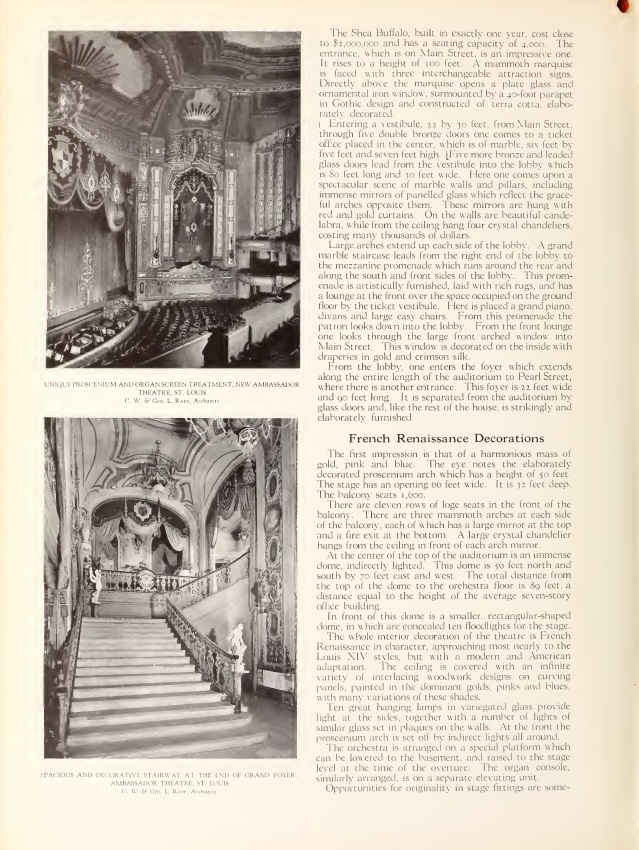
Photo Credit: Motion Pictures News - December 25, 1926
"Comparing in gorgeousness of decoration, completeness of equipment, and conveniences for patrons with the finest theatres of the capitals of the world, Shea's Buffalo Theatre has been open to the expectant public which now is singing its praises on all sides..." Shea's Buffalo Theatre is prominently featured in an article on Ultra Modern Theatres built by C. W. & Geo. L. Rapp
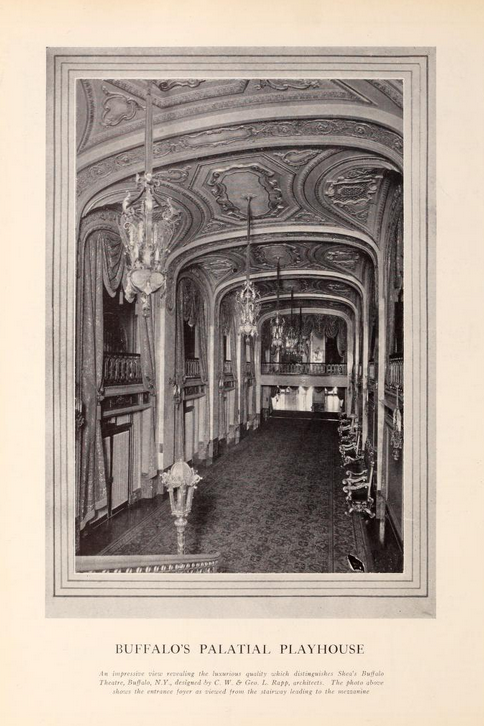
Photo Credit: Motion Picture News - April 1927
Bing Crosby appears as one of the "Rhythm Boys" with Paul Whiteman, the "King of Jazz"
Photo Credit: October 2, 1927
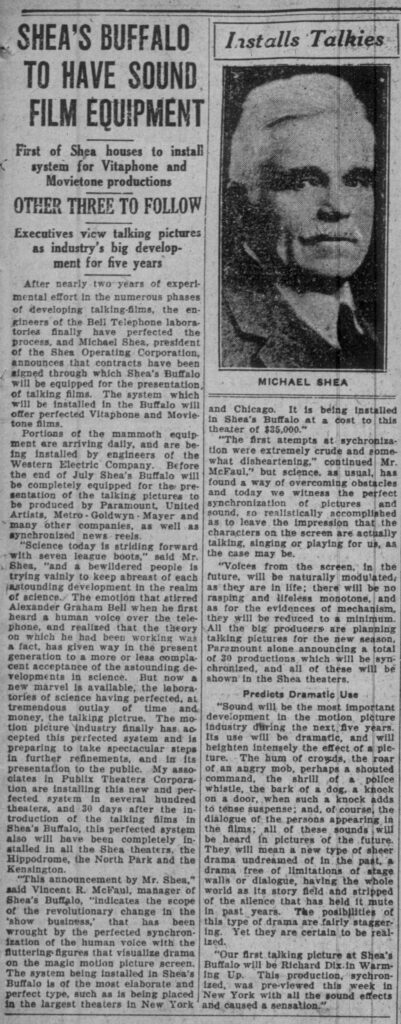
Photo Credit: The Buffalo Courier-Express - July 8, 1928
When Shea's Buffalo Theatre was built, all films were silent pictures accompanied by a live orchestra but that would change on October 6, 1927 when The Jazz Singer premiered. Less than a year later, Michael Shea announced the upgrades to our theater's at a cost of $35,000.
Shea's Buffalo "Personality Girl" Contest of 1928
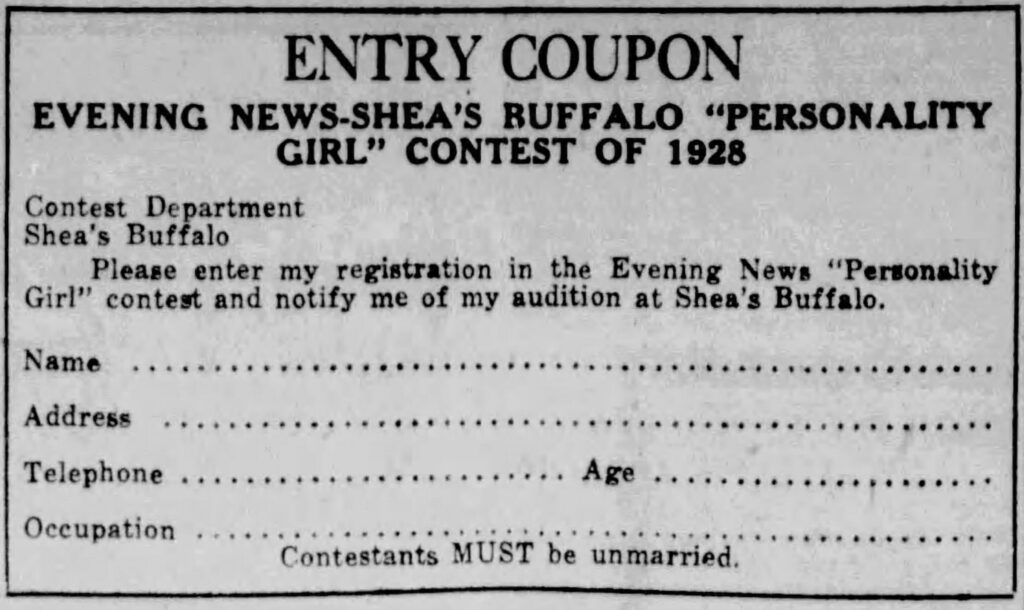
Photo Credit: The Buffalo Evening News - July 16, 1928
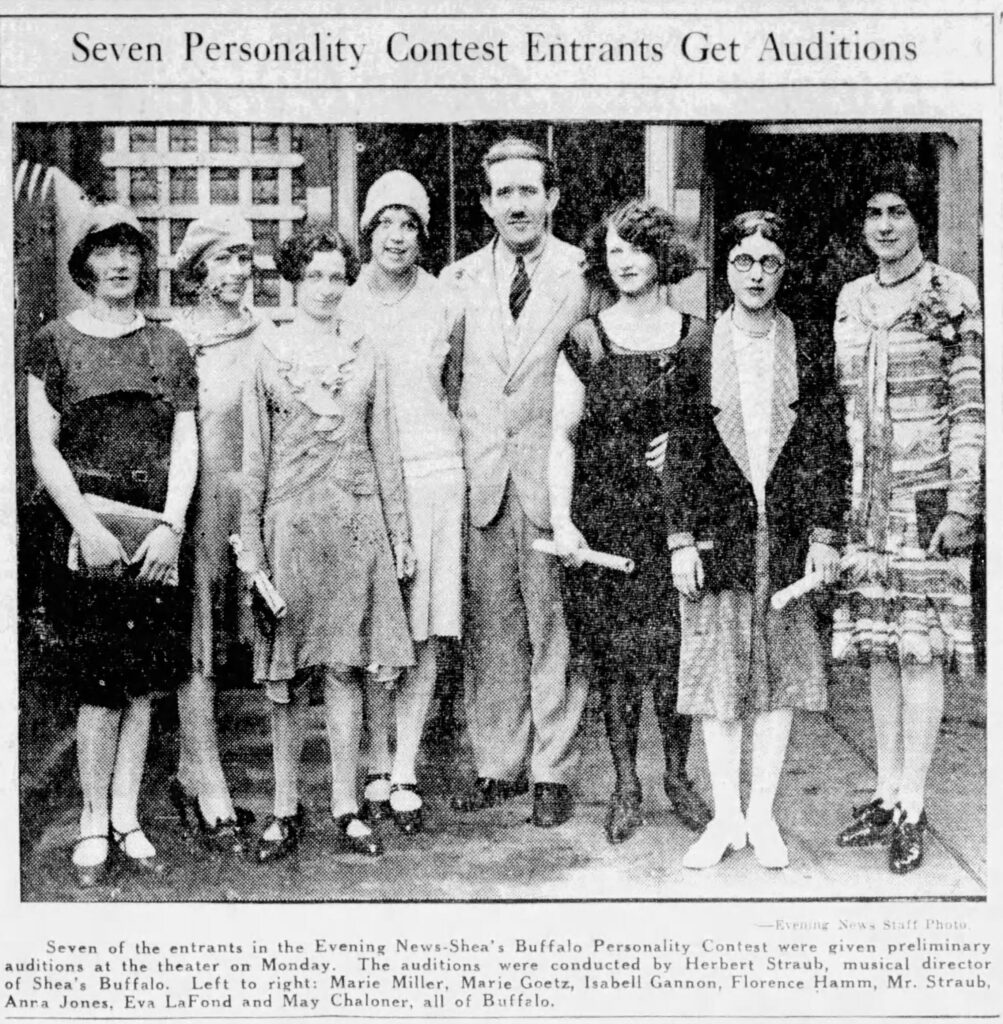
Photo Credit: The Buffalo News - July 23, 1928
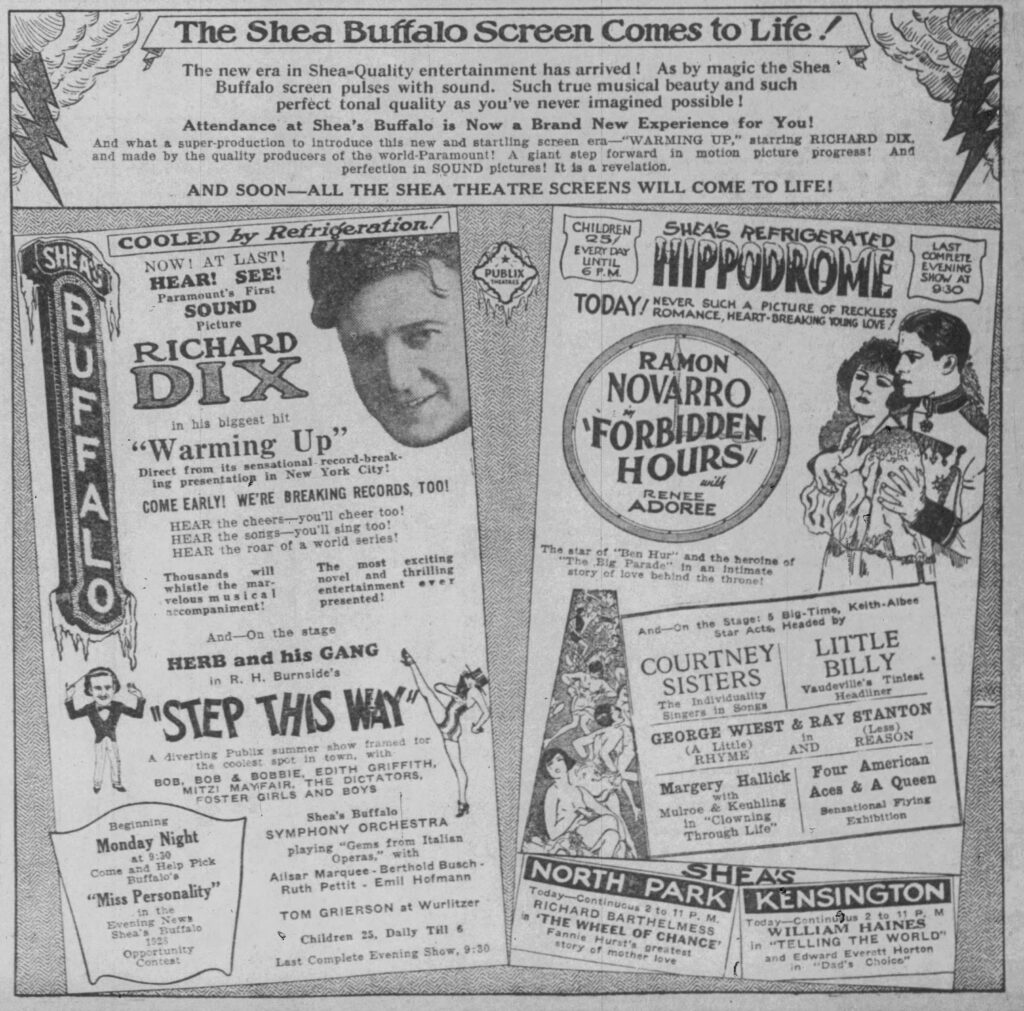
Photo Credit: The Buffalo Courier-Express - July 29, 1928
Sound AND air-conditioning? Shea's was the place to be in the summer of 1928!
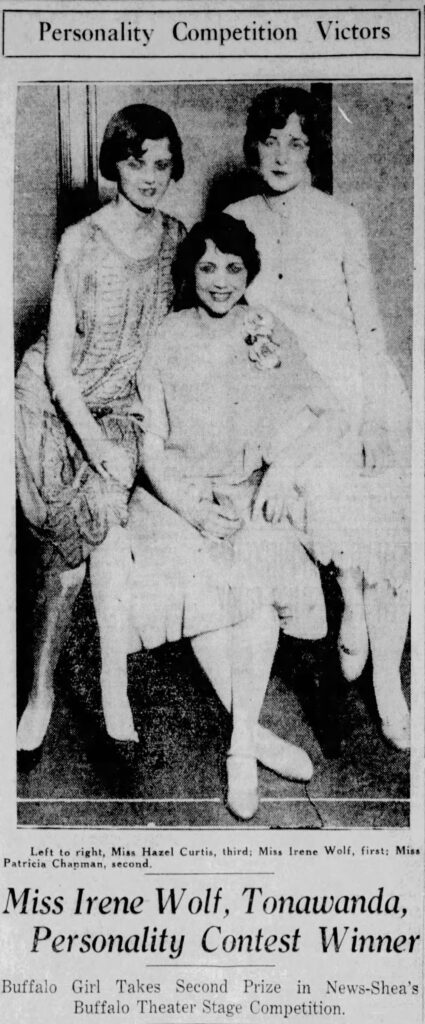
Photo Credit: The Buffalo News - August 4, 1928
Irene Wolf, Personality Girl of Shea's Buffalo
Jackie Coogan and Father, John Coogan,
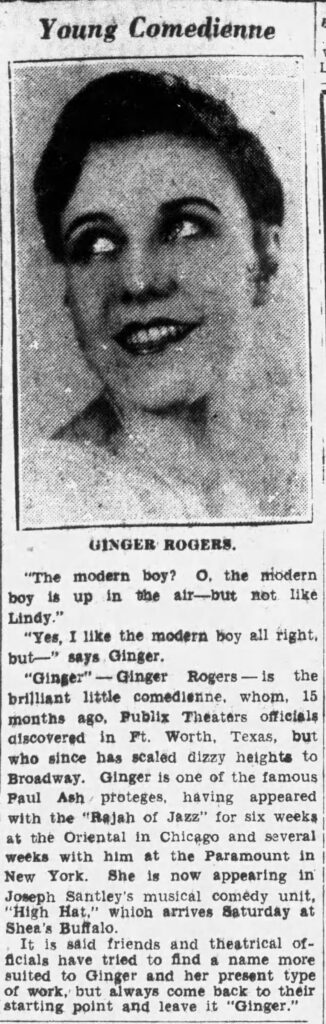
October 18, 1928 - Ginger Rogers at Shea's Buffalo
Jack Benny headlines
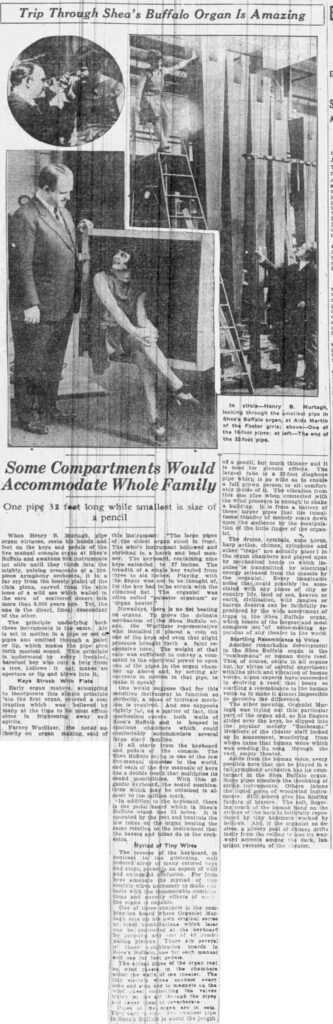
Photo Credit: The Buffalo Courier-Express - November 11, 1928
A rare behind-the-scenes article about the Wurlitzer organ at Shea's Buffalo Theatre with organist Henry B. Murtagh!
Tom Mix and "Tony" make special appearance
Ray Bolger "The Eccentric Dancer" (later better known for playing the Scarecrow in The Wizard of Oz) headlines
Baritone George Dewey Washinton headlines
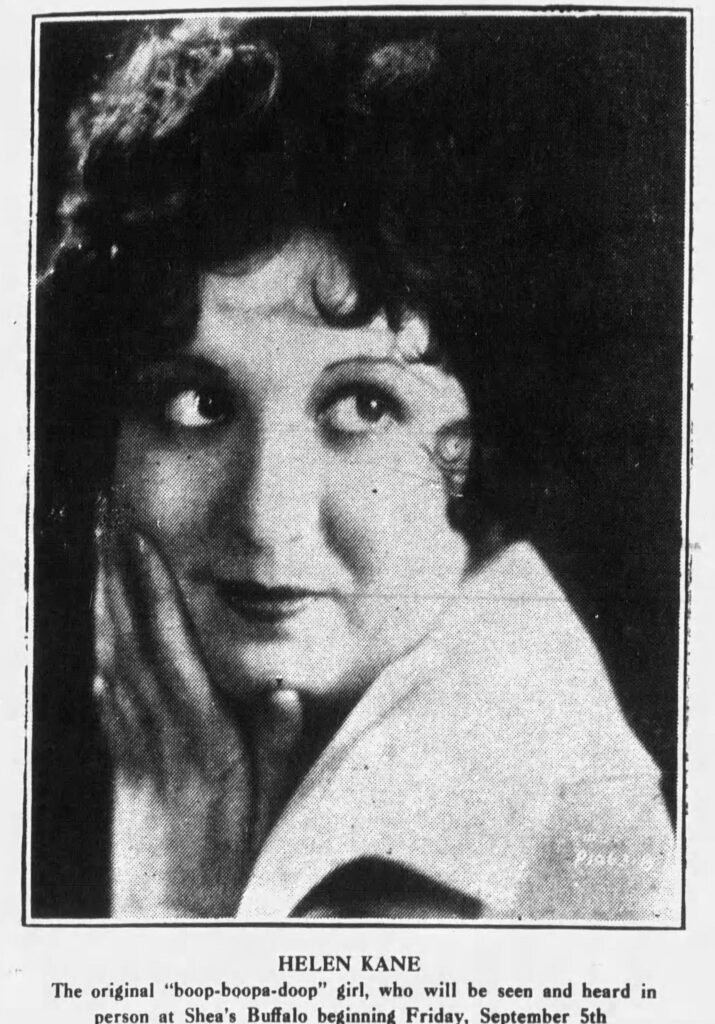
September 5, 1930
Duke Ellington and his Cotton Club Band
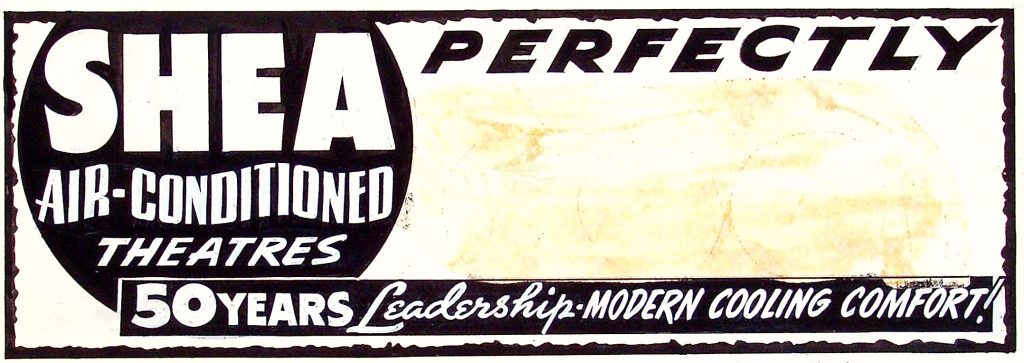
Did You Know? Willis Haviland Carrier invented air-conditioning in Buffalo, NY!
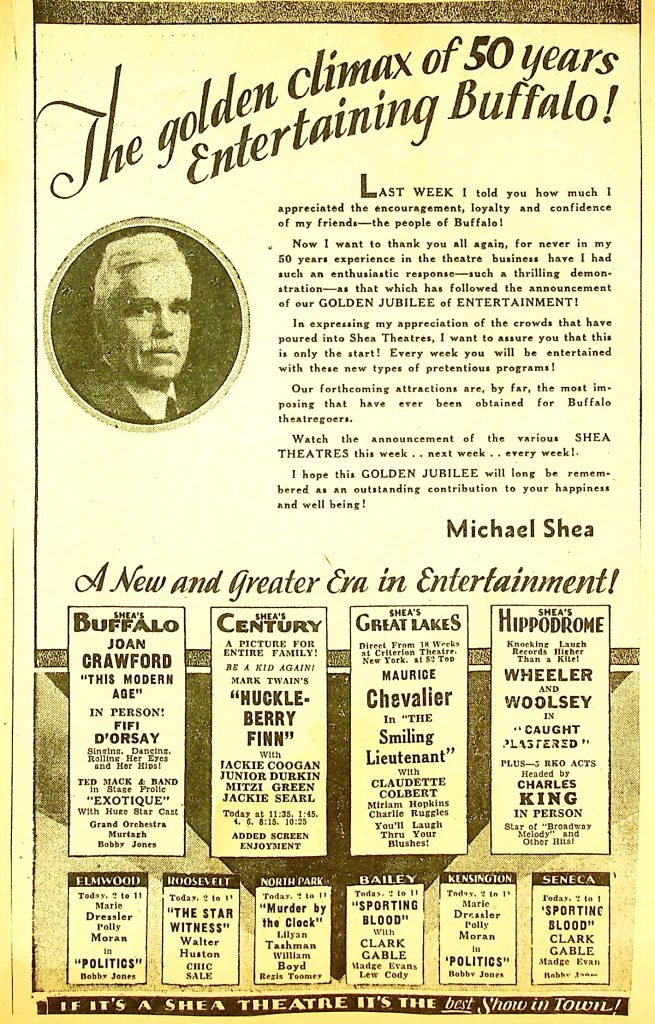
Michael Shea opened his first theatre in 1881 - and was still entertaining Buffalo by 1931!
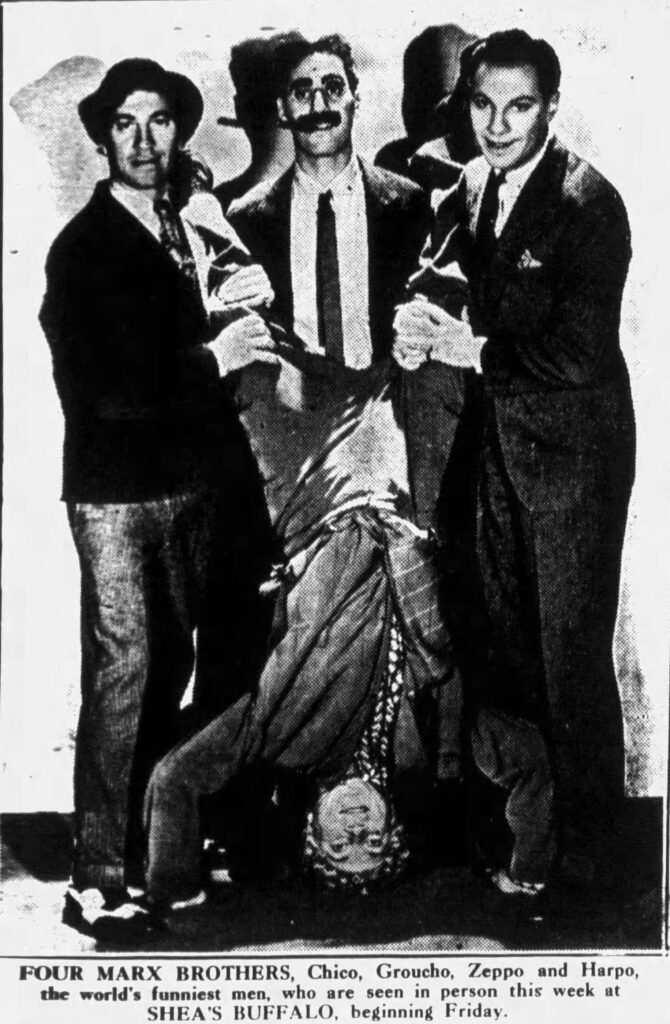
Photo Credit: Buffalo Jewish Review - December 4, 1931
The Marx Brothers - Groucho, Harpo, Chico, Zeppo: December 5 - 12, 1931
George Burns and Gracie Allen headline
Rudy Vallée and his Connecticut Yankees set a house record at the theater, grossing $42,000 in one week.
The Zany Ritz Brothers Headline
Dance team of Buck and Bubbles headline
Great Comedy Team of Smith and Dale appearing in "Crazy Quilt"
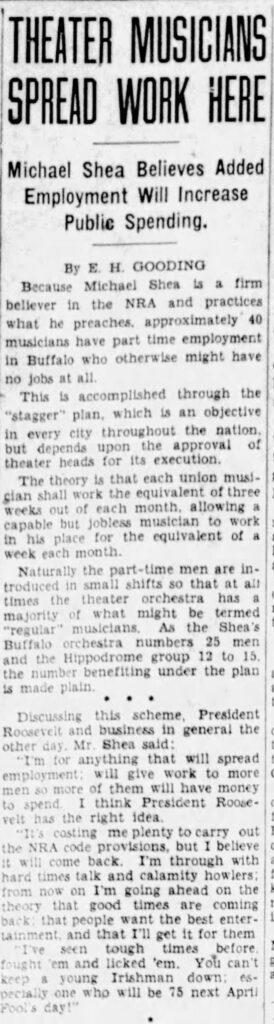
Photo Credit: The Buffalo Evening News - December 14, 1933
The "NRA" referred to in this article stands for the National Recovery Administration, an agency established President Roosevelt in response to the Great Depression. By December 1933, the national unemployment rate was at 24.9% but Mike Shea insisted on keeping his theaters fully staffed during these hard times.
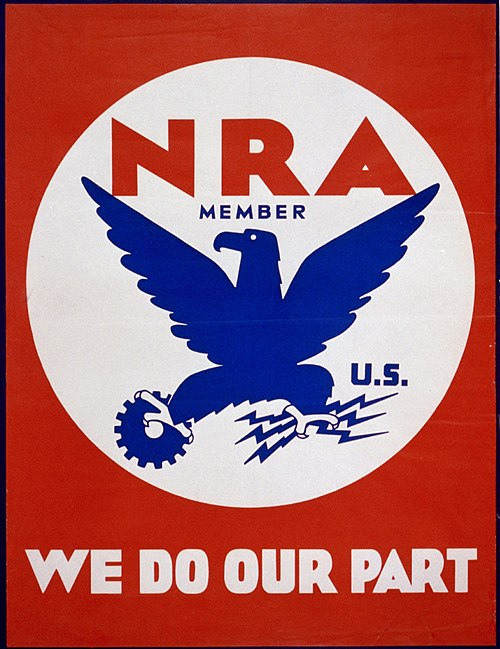
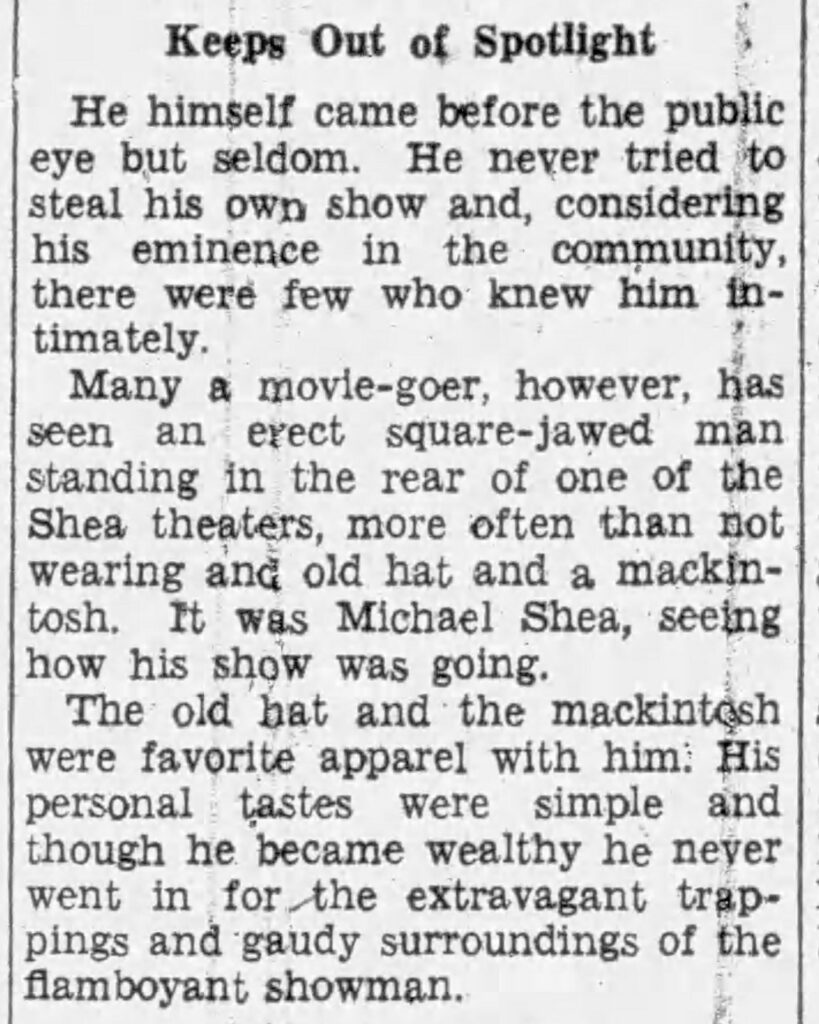
Photo Credit: The Buffalo Times - May 16, 1934
Mike Shea was known to personally hand each performer their weekly paycheck and he kept a sharp eye on all the shows to make sure the audiences were enjoying them or if it was "not so good".. A deserving actor might find an extra $100 slipped into his envelope or another actor down on their luck might find themselves booked and paid top price to perform.
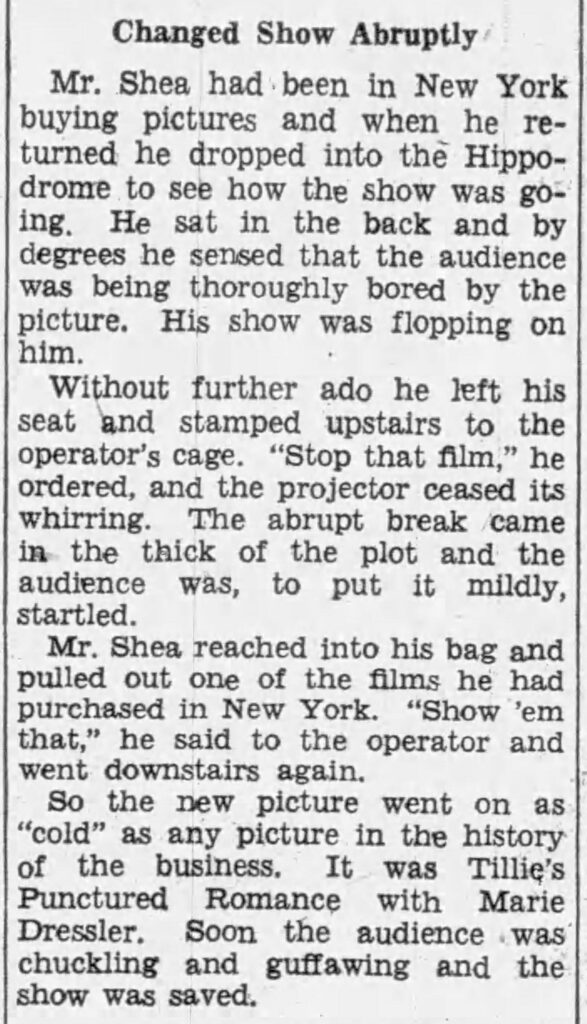
Photo Credit: The Buffalo Times - May 16, 1934
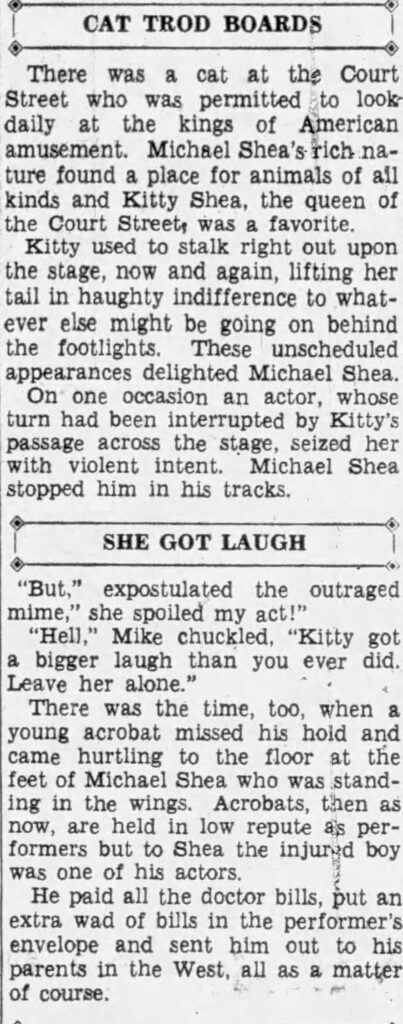
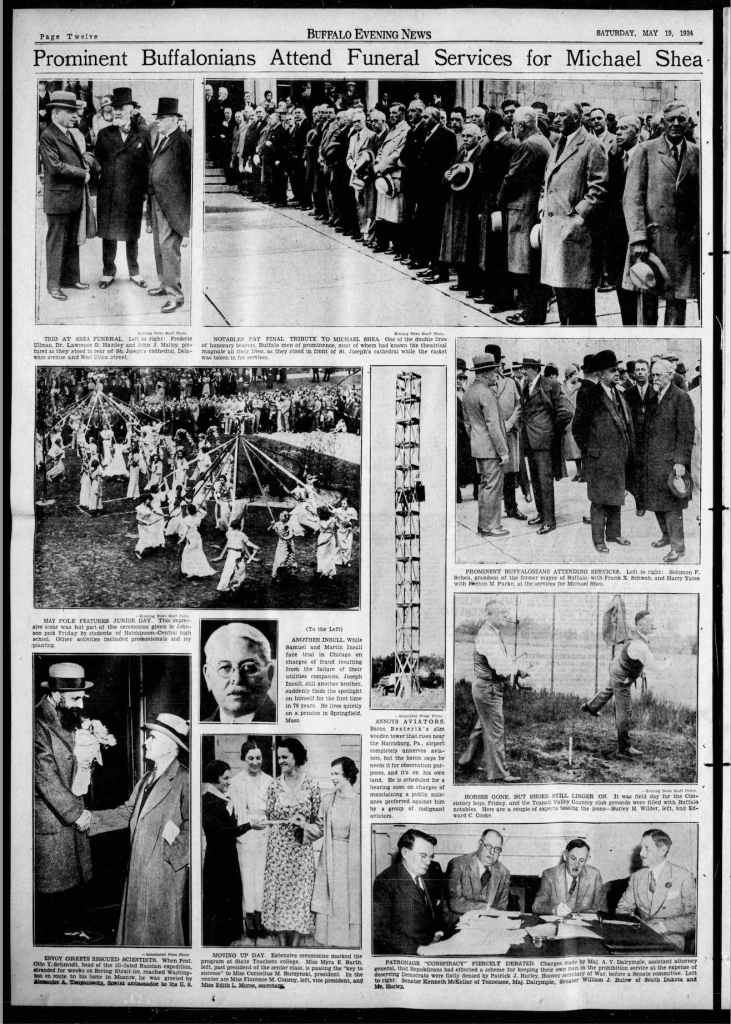
Photo Credit: The Buffalo Times - May 20, 1934
Michael Shea was a friend to performers, both feline and human.
Great "Hoofer" George Raft headlines
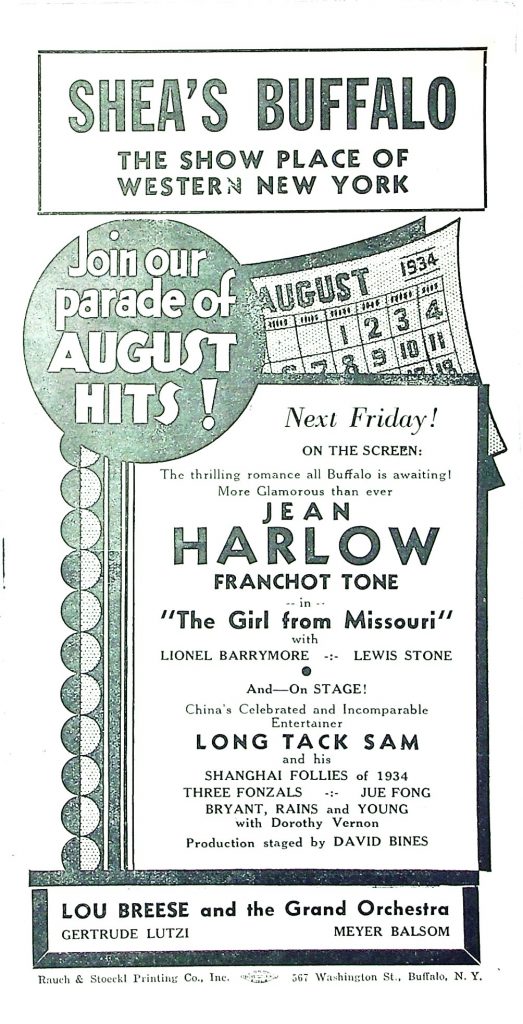
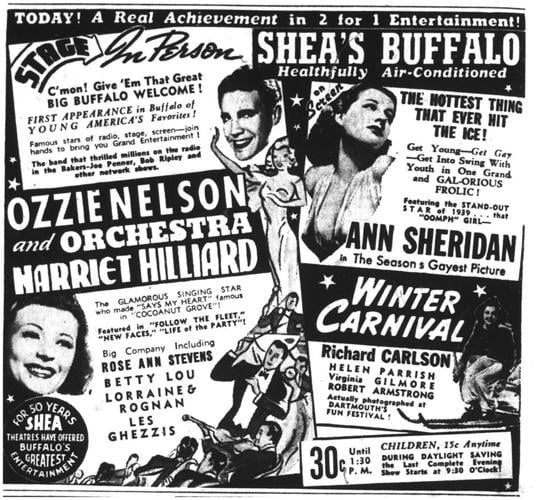
July 26, 1936
Phil Spitalny's "All-Girl Orchestra"
Glenn Miller and his Orchestra
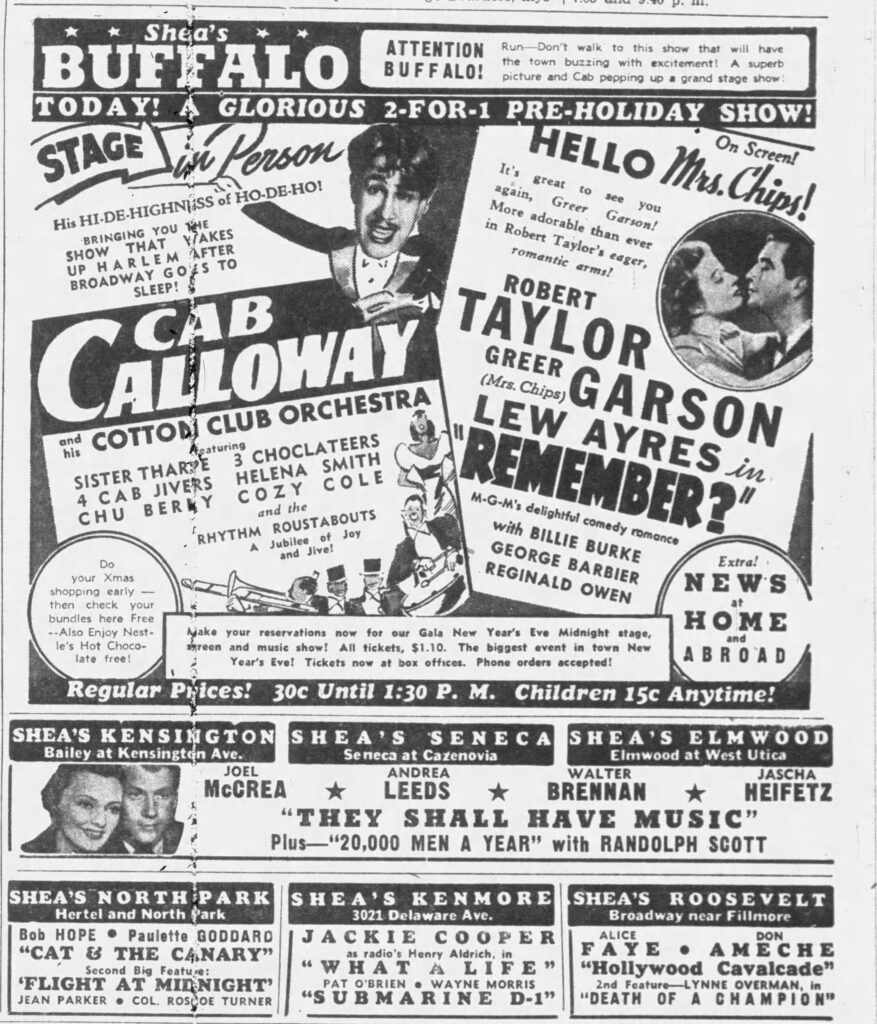
December 15, 1939
To many in the industry, the city of Buffalo was synonymous with Shea. In honor of his golden jubilee celebrating 50 years of show business, Variety magazine surprised Michael Shea with a feature article, interviews, and well-wishers from many friends and fans. But only a few months later, the news would be filled with posthumous tributes.
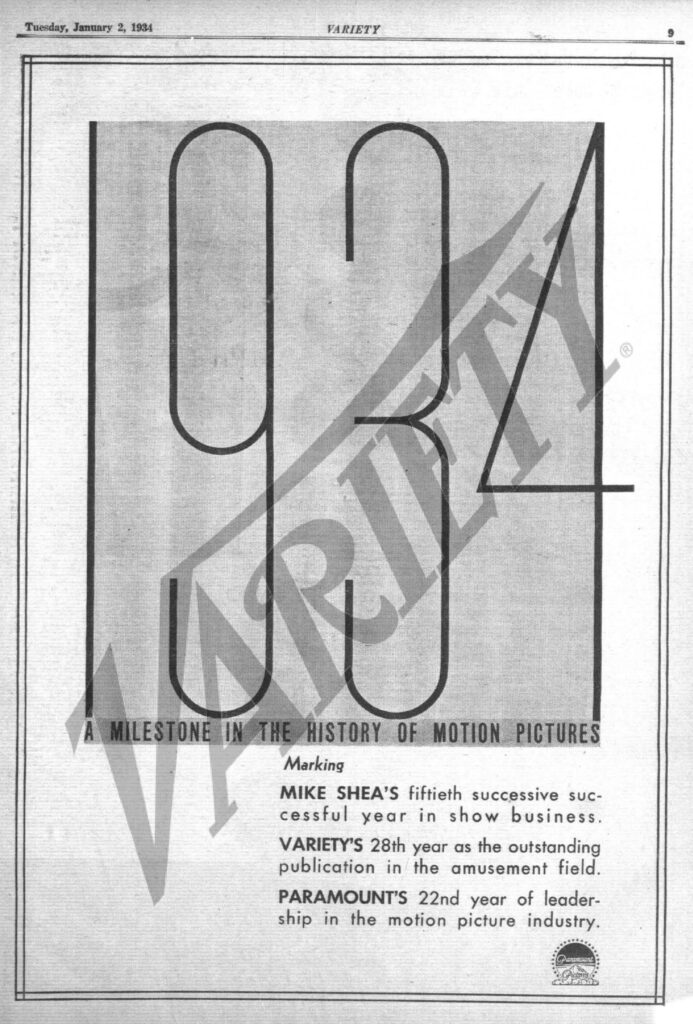
Photo Credit: Variety - January 2, 1934
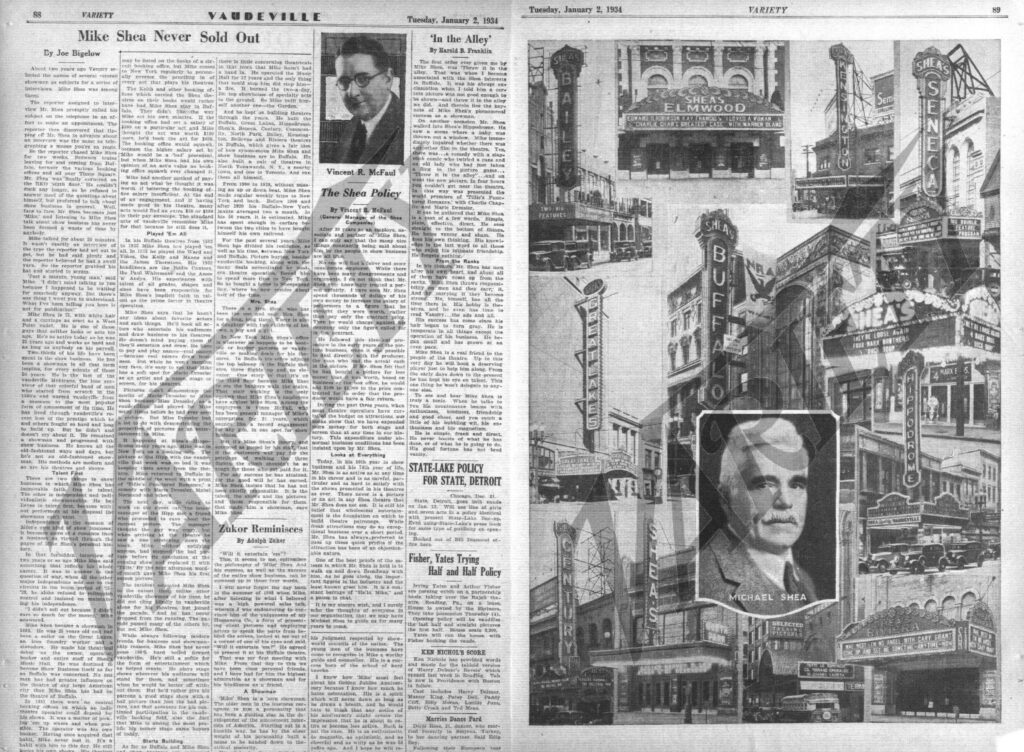
Photo Credit: Variety - January 2, 1934
In January 1934, Variety honored Mike Shea for surpassing his golden jubilee anniversary in show business with a two-page spread and a smattering of accolades from his peers, friends, and stars of the stage and screen.
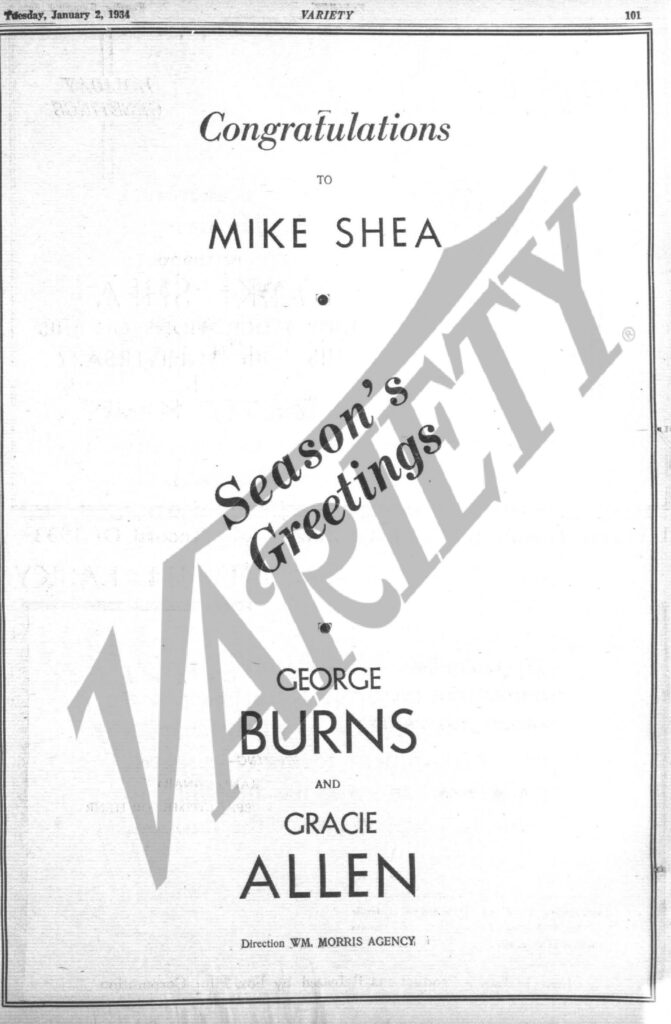
Photo Credit: Variety - January 2, 1934
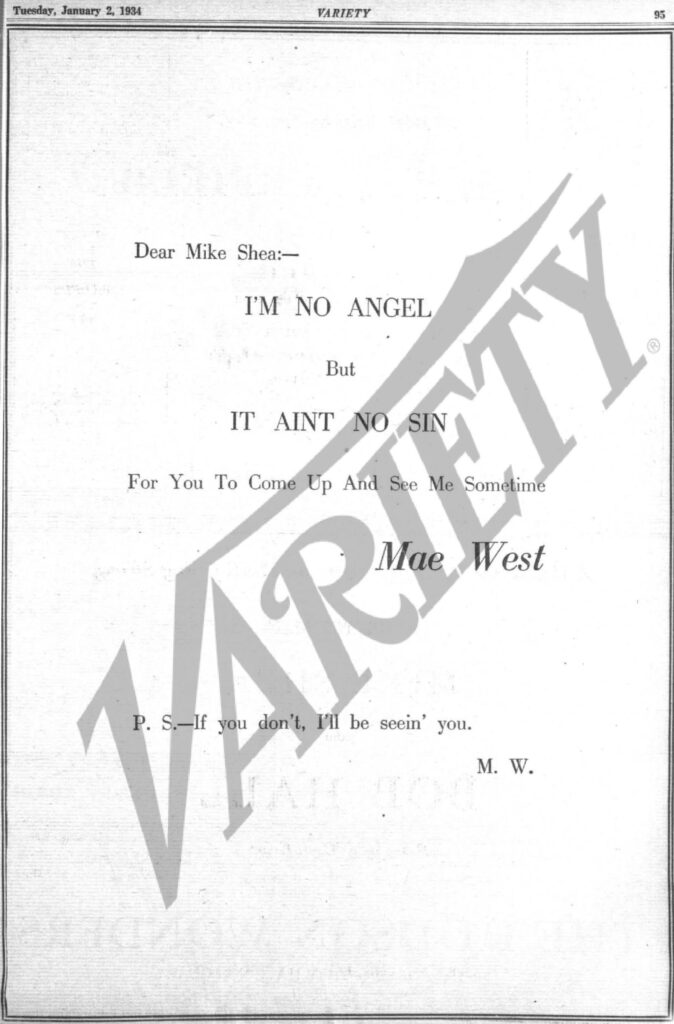
Photo Credit: Variety - January 2, 1934
Yes, it's that Mae West - although as far as we know, she never performed at a Shea's theater!
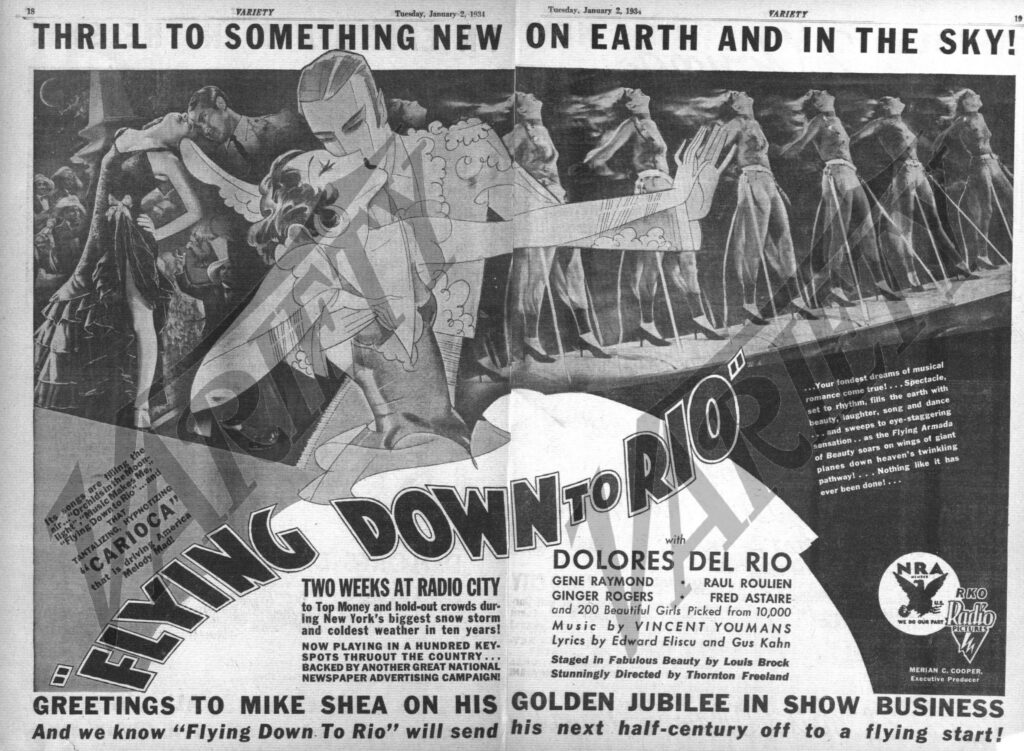
Photo Credit: Variety - January 2, 1934
An RKO film wouldn't have played at Shea's Buffalo (as a Paramount studio).
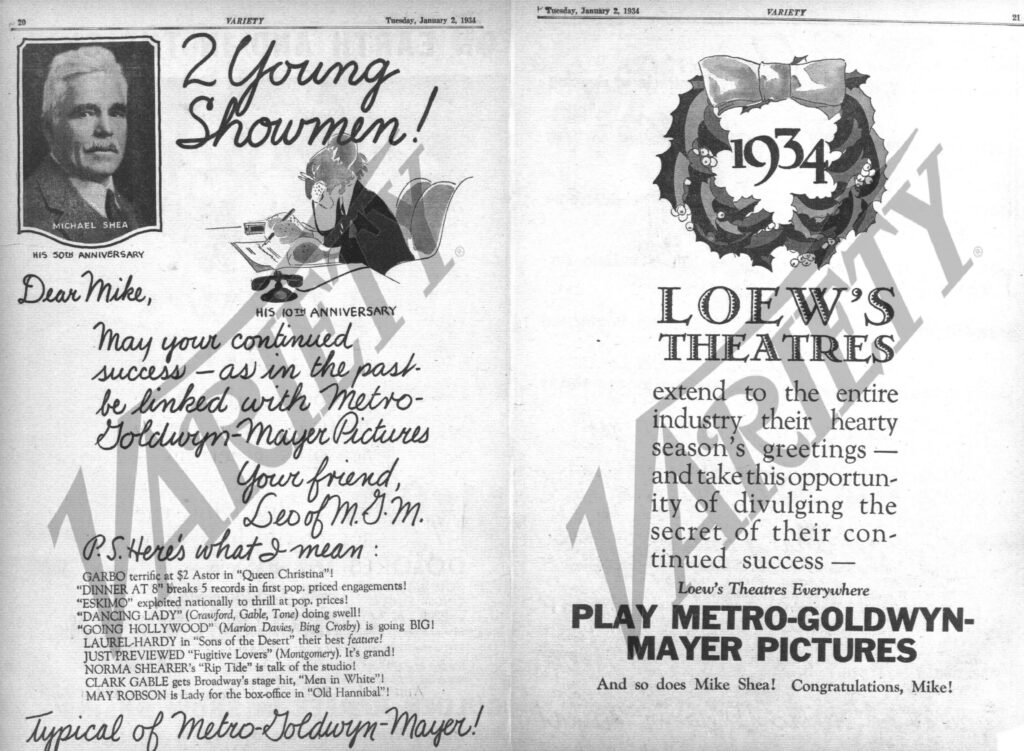
Photo Credit: Variety - January 2, 1934
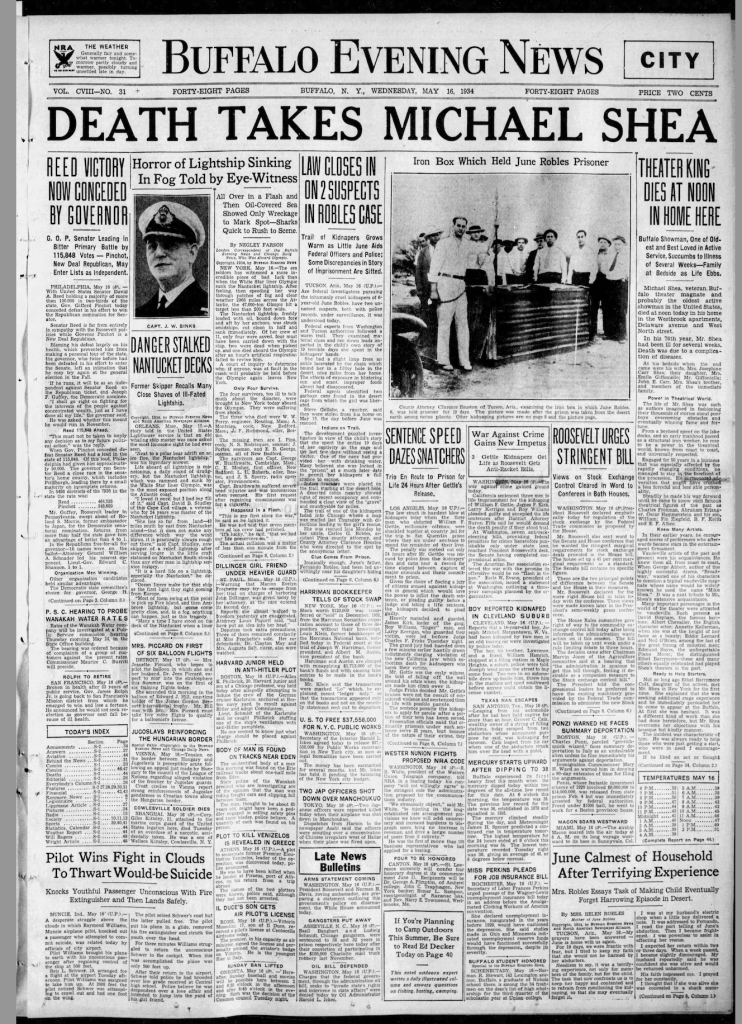
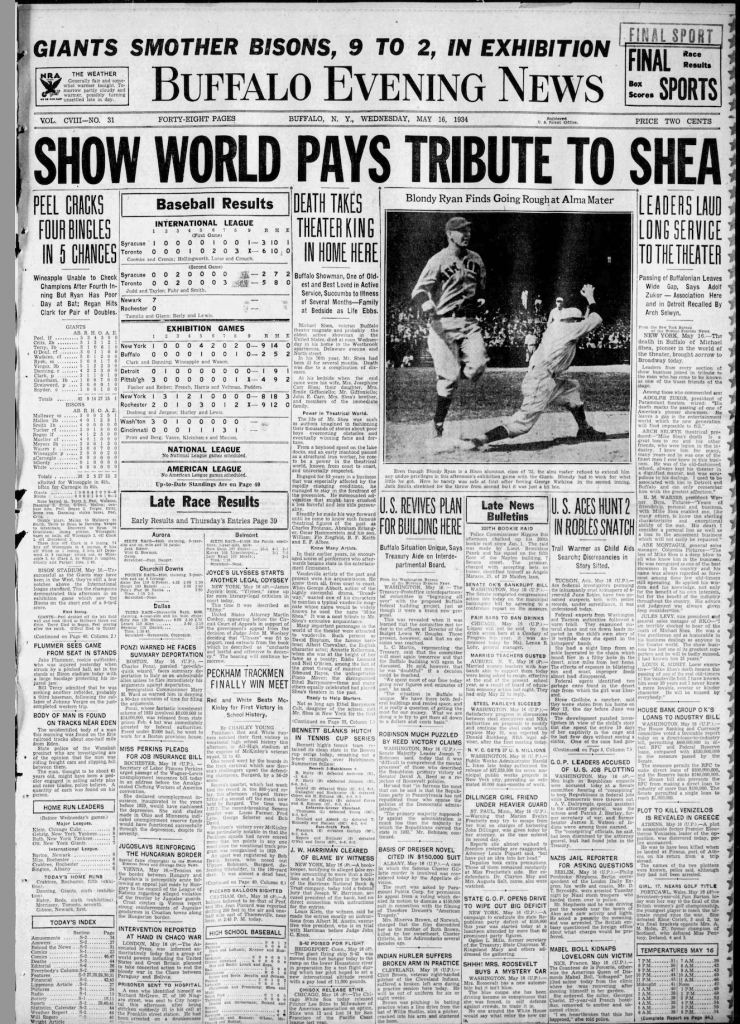
May 16, 1934 - Michael Shea Dies
Mary's Scrapbook
Photo Credit: Buffalo State Archives & Special Collections Department, E. H. Butler Library - July 6, 2016
Shea's theaters:
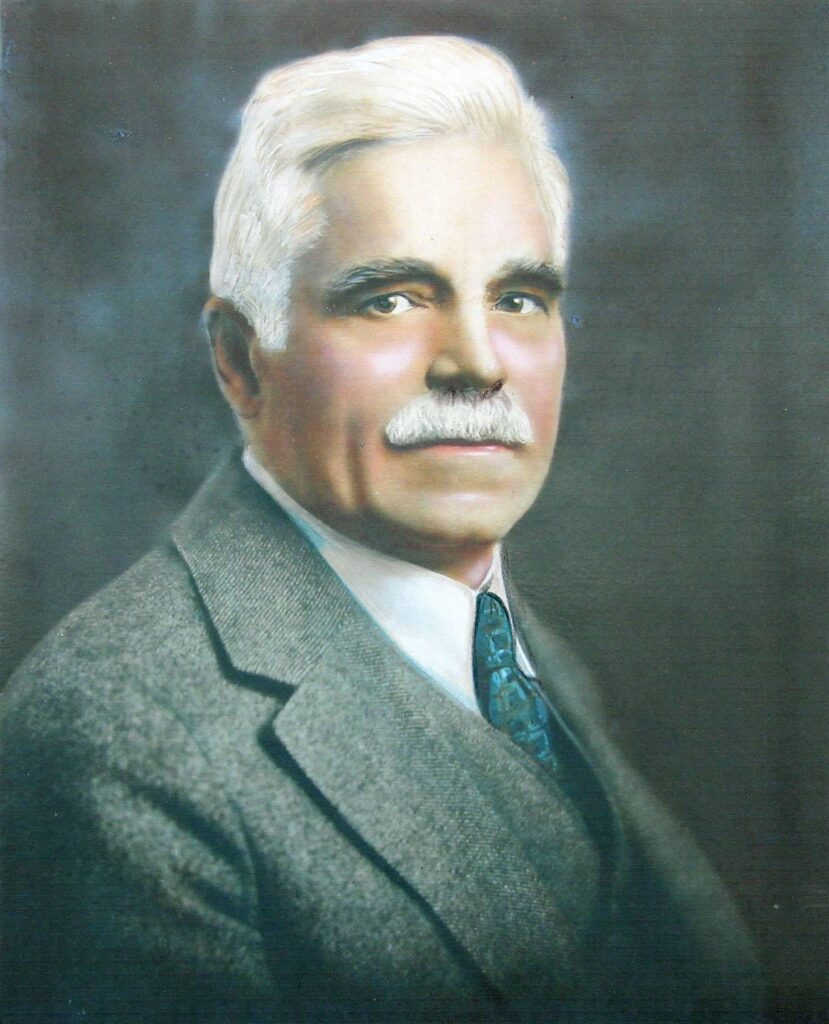
From Michael Shea's Last Published Interview:
“Mike Shea was a decent man and a great showman and the best liked and most popular theatrical manager in America. He was my friend for 40 years. He did all his own booking and in an amazing manner. Now here was a man, a simple soul from upstate, no continental sophisticate, and yet he's come down to New York and pick a foreign act at the snap of his fingers - and that act never failed. Why in those days his bills made his house in Buffalo the finest show shop in America. He had an astonishing flair for picking what the public liked.”
As twelve-year-old boy growing up around Vermont Ave, Vincent McFaul already knew he wanted to work in a theater. His neighbor suggested that he try taking a job during his summer vacation at the theater box office - that theater being Shea's Garden Theater and that neighbor being Michael Shea.
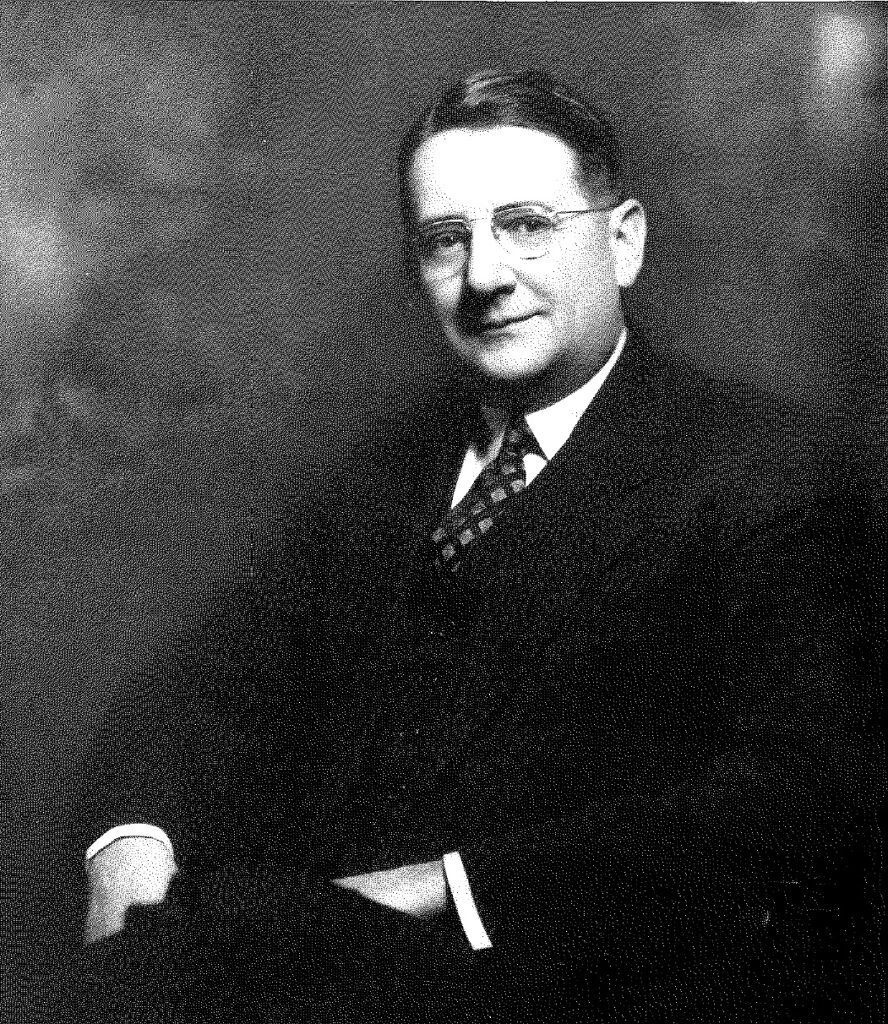
Vincent McFaul continued working for Shea's - and when he graduated college, he became the manager of the Shea's Criterion, the Shea's Hippodrome, the Shea's Buffalo, and after Michael Shea's death in 1934, now in charge of the Buffalo Theaters Inc. "It's the only job I've ever had and it's the only business I know anything about."

Photo Credit: The Buffalo Times - July 15, 1934

Photo Credit: The Buffalo News - March 2, 1949
“A properly conducted theater is of the same importance to a community as a school or church. Such a theater contributes to the general welfare of the community, because wholesome recreation is essential to its well being.”
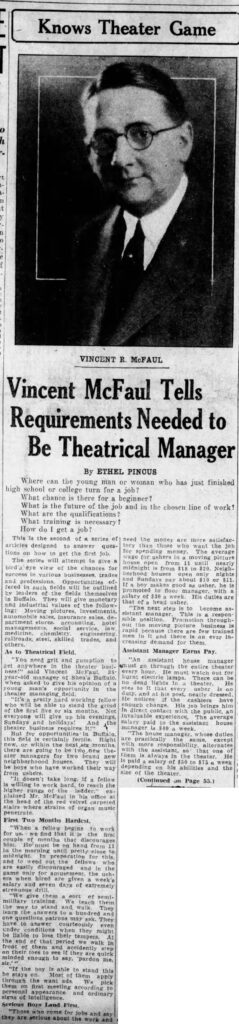
Photo Credit: The Buffalo Times - May 16, 1926
"You need grit and gumption to get anywhere in the theater business!"
Red Skelton with Harry James and His Orchestra
Abbott and Costello
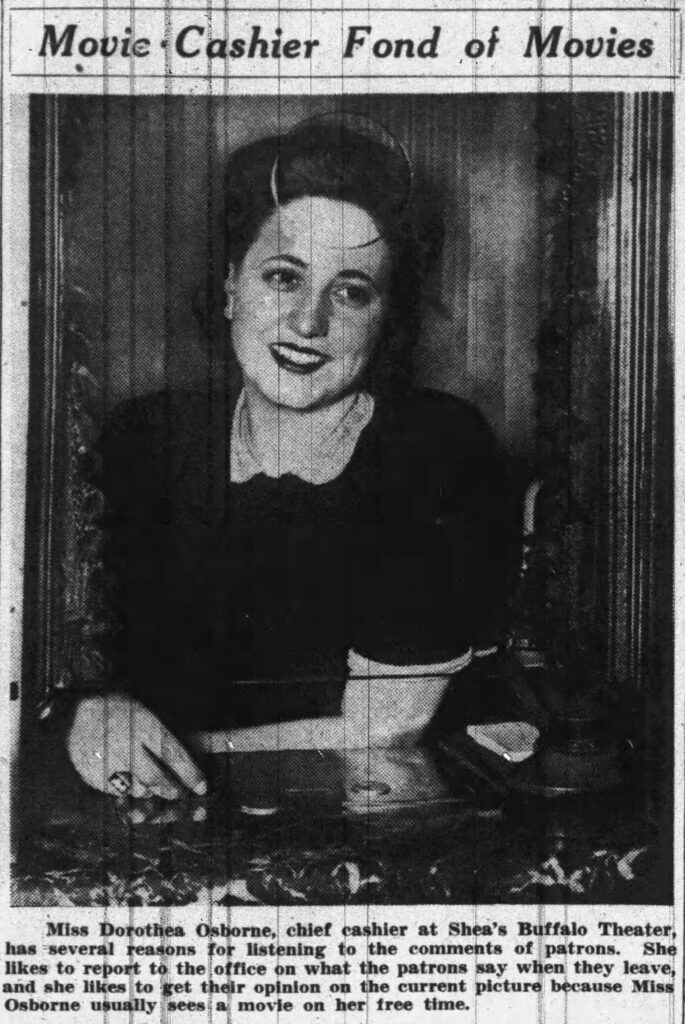
Photo Credit: The Buffalo Courier-Express - January 5, 1941
Miss Dorothea Osbourne, chief cashier, was interviewed by the Buffalo Courier-Express about her work here at Shea's Buffalo Theatre. "I always report on reactions to the office. When patrons come out smiling and happy, we know we have a hit."
Frank Sinatra, as the baritone soloist of Tommy Dorsey's Stage Revue
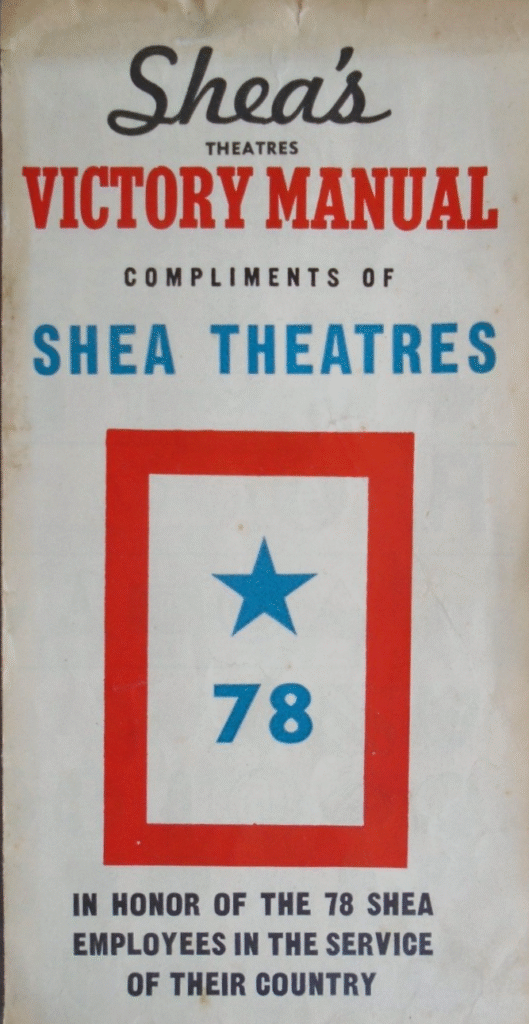
Shea's on the Home Front
The Andrews Sisters
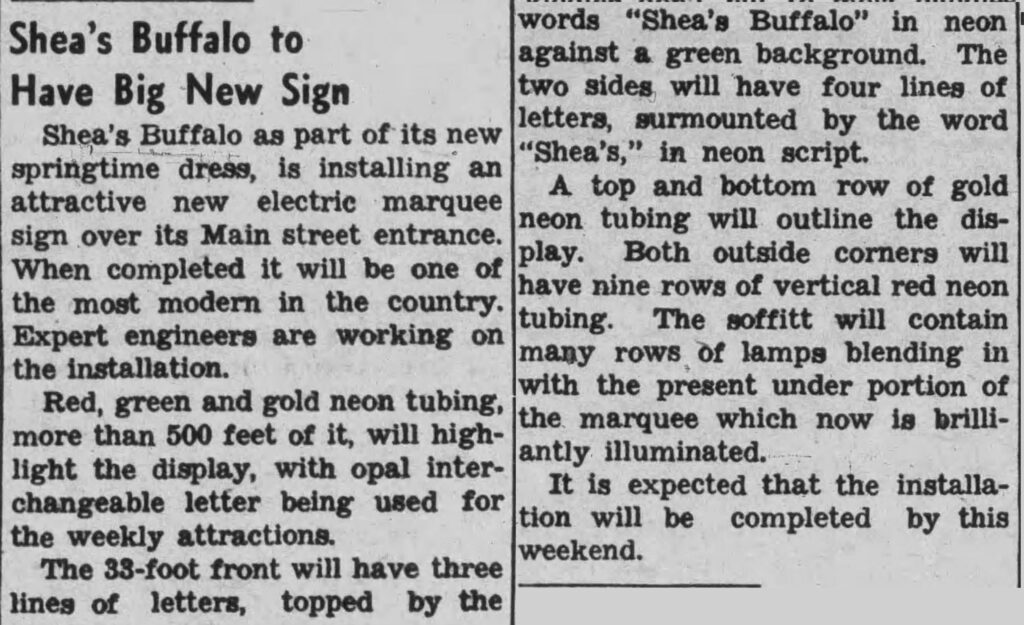
Photo Credit: Catholic Union and Echo - March 27, 1942
In 1942, the original marquee was replaced by a new electric sign and would stay up for the next fifty-two years.
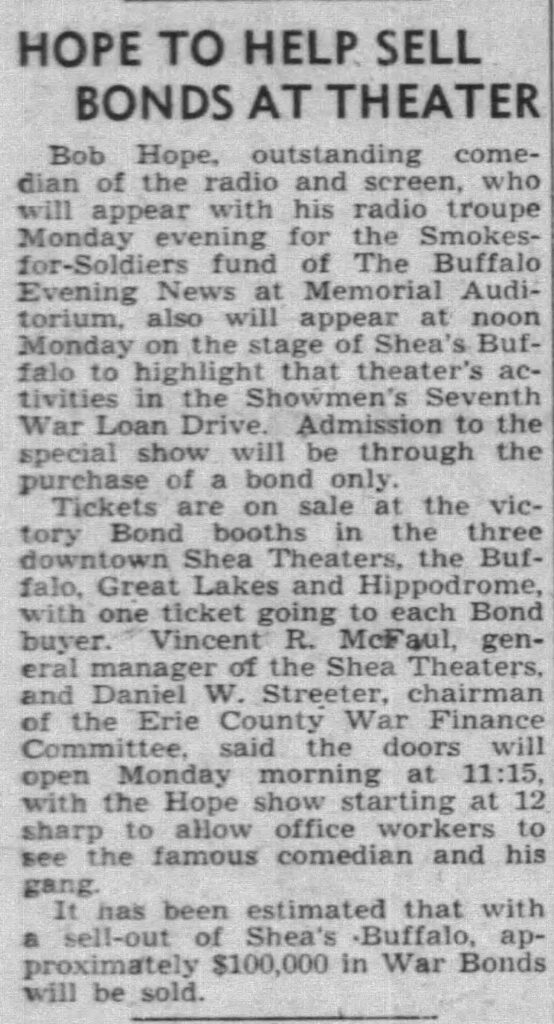
Photo Credit: The Buffalo News - May 21, 1945
Shea's theaters stayed open during World War II, to provide the much-needed entertainment for the home front but also serving as a source of fundraising for the war efforts. Stars like Bob Hope appeared across the country, hosting drives to sell war bonds and support the Red Cross.
The Ink Spots, Cootie Williams, and Ella Fitzgerald
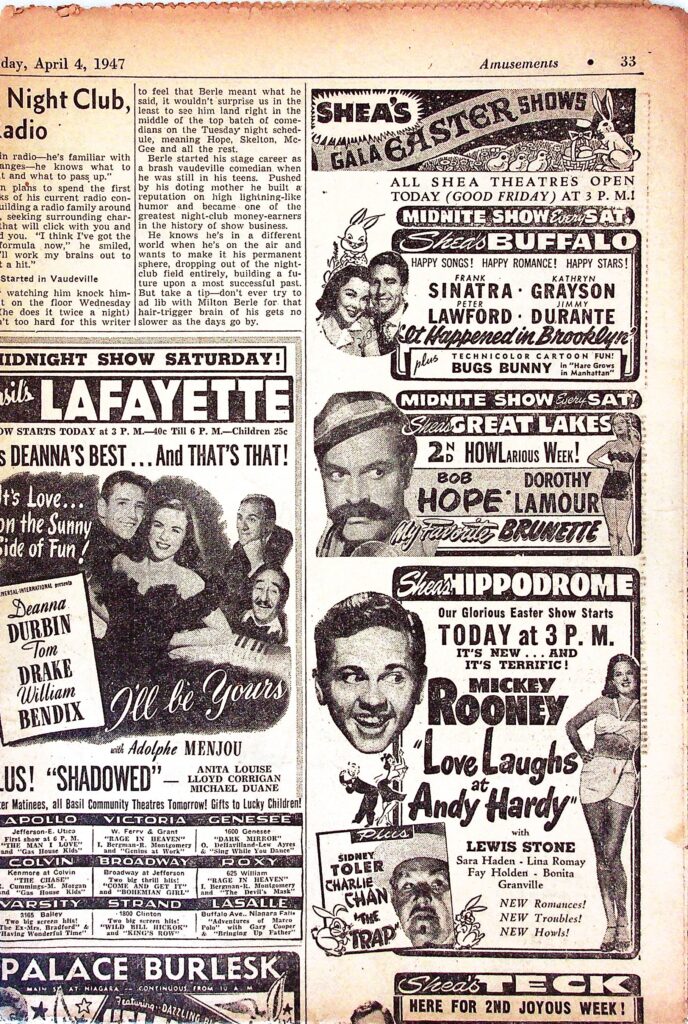
Photo Credit: Buffalo Evening News - April 4, 1947
Advertisements for various Shea's theatres playing Easter Weekend
United States vs. Paramount Pictures
The Ink Spots
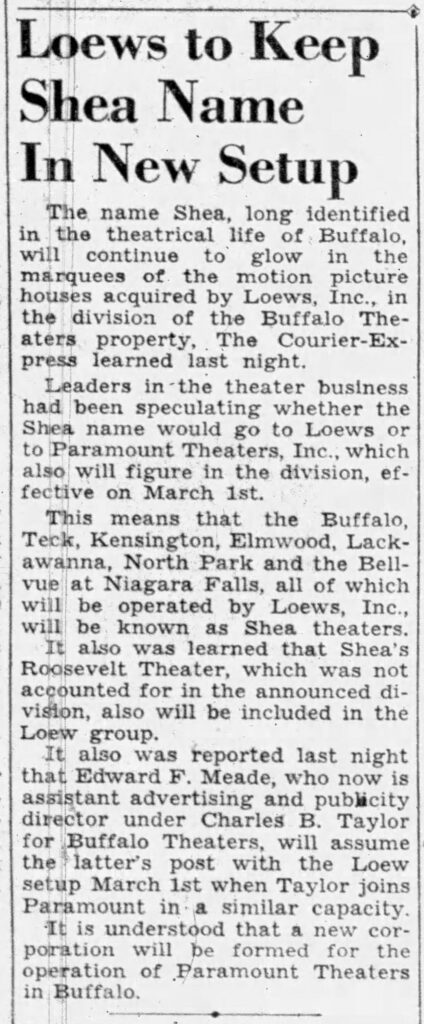
Photo Credit: The Buffalo Courier-Express - February 20, 1949
Following the fallout of United States vs. Paramount Pictures, the Shea's theater chain was divided and sold off, with Shea's Buffalo Theatre acquired by Leon Lawrence Siddell of Loews Inc.
Theater Organists
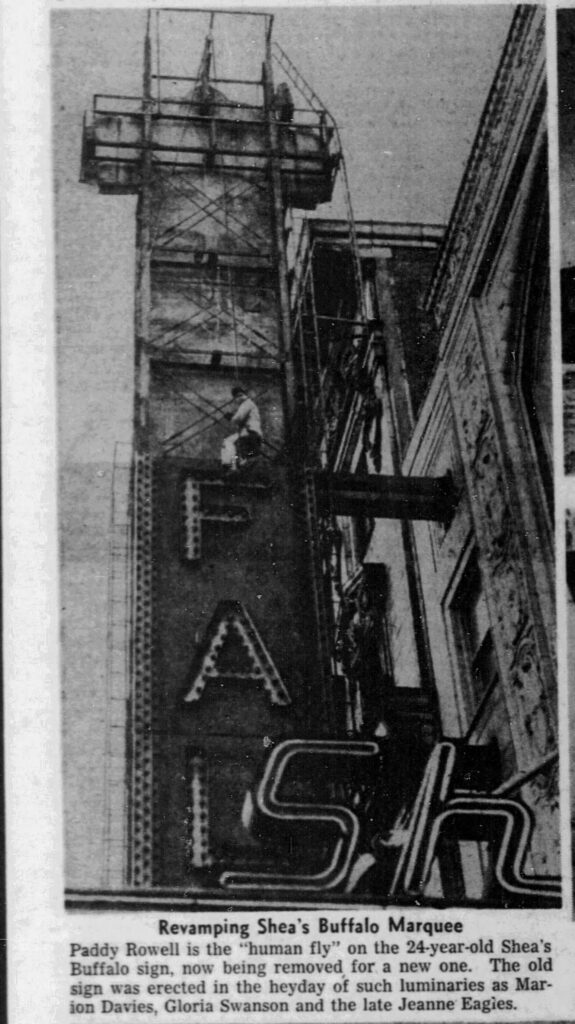
Photo Credit: The Buffalo News - April 7, 1950
This article shows the new blade sign being installed in 1950 after the original Shea's blade sign came down after 24 years of lighting up Main Street. It was a new era for Shea's Buffalo, now known as Loew's Buffalo.
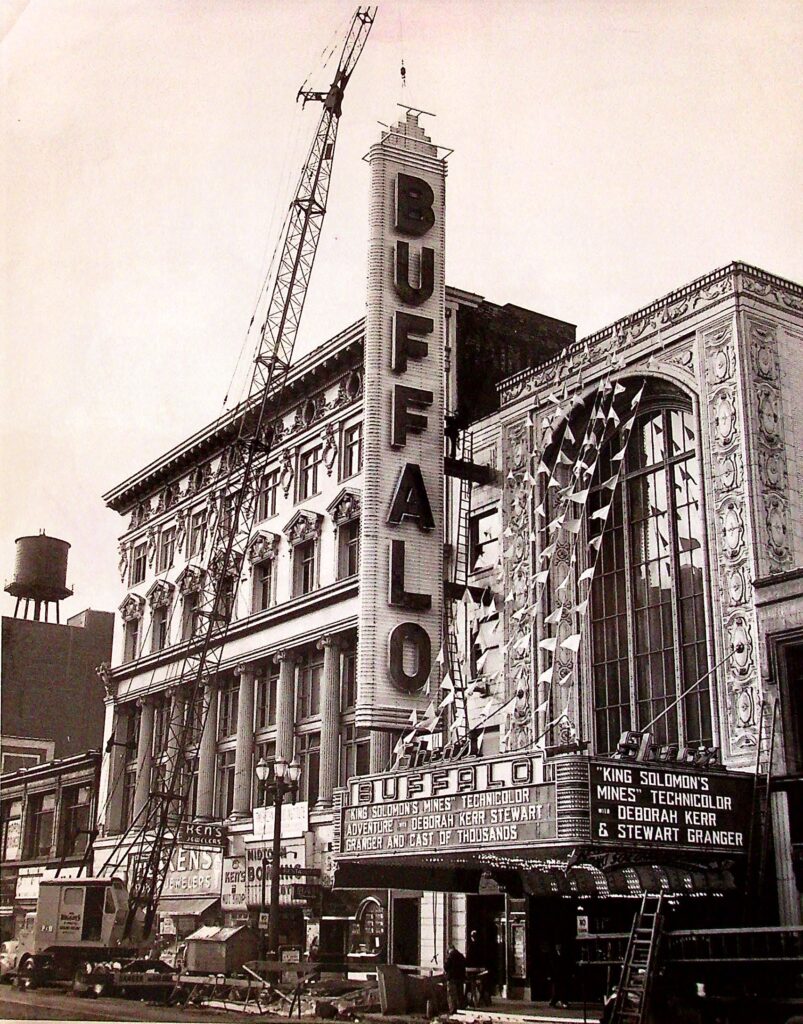
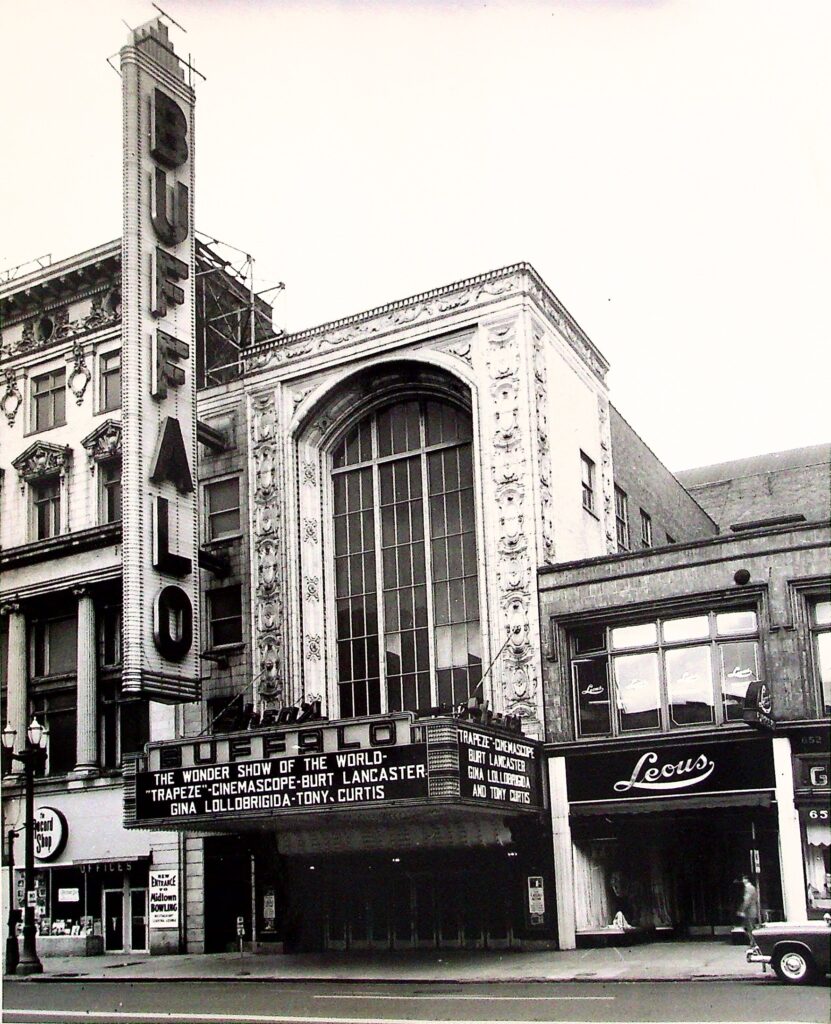
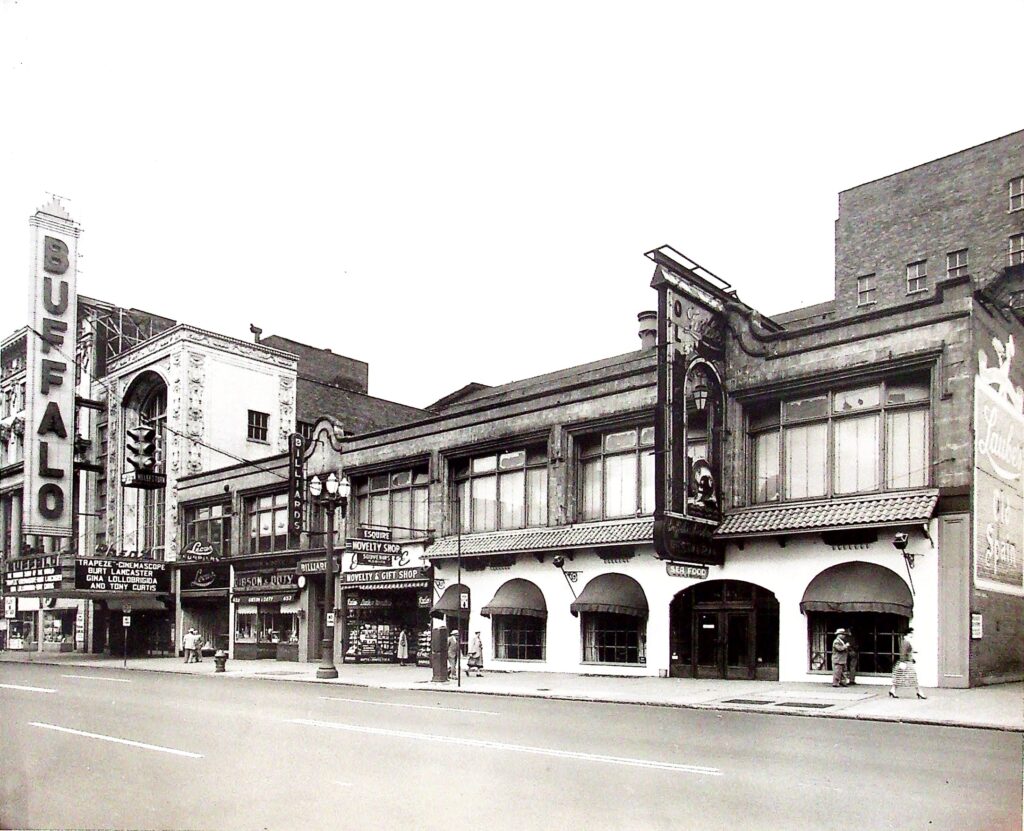
At the time this photo was taken, Laube's Old Spain (the future site of Shea's Smith Theatre) had moved in next door. That mural on the brick wall is still here today!
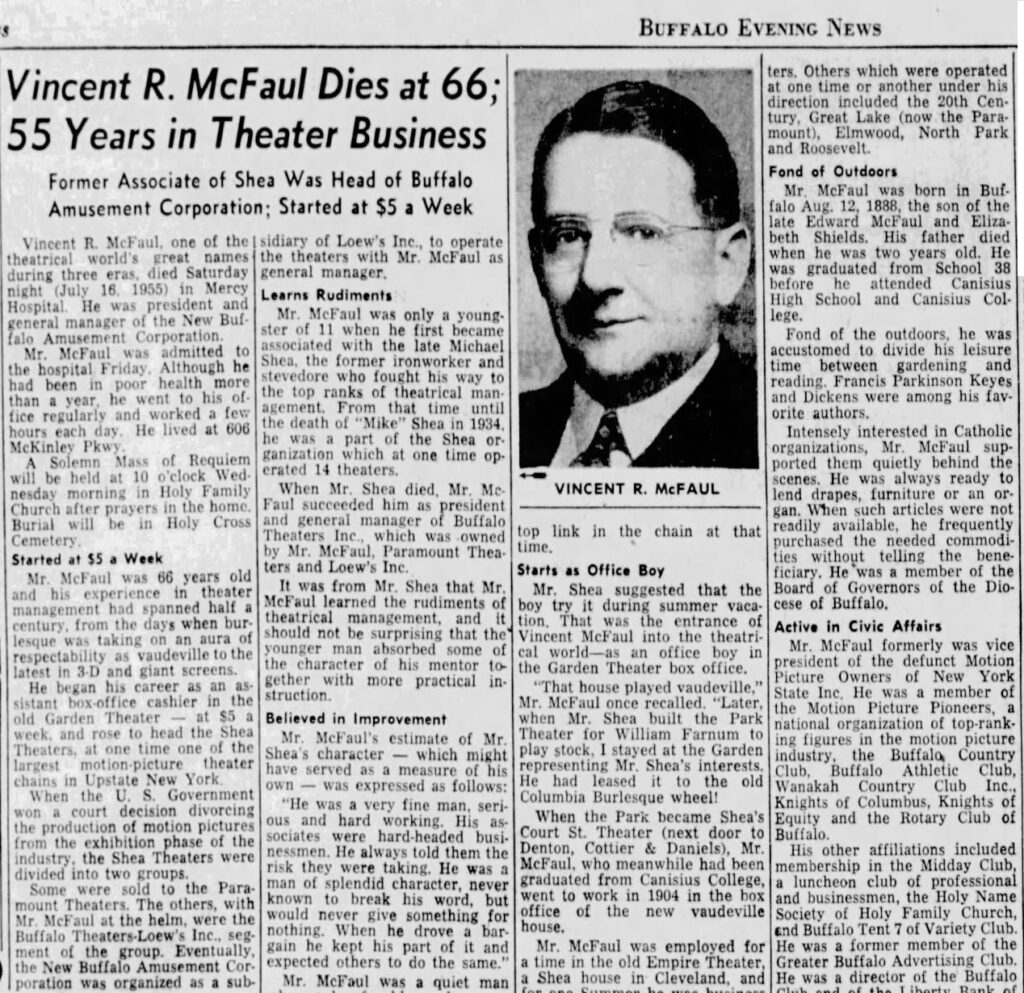
Photo Credit: The Buffalo News - July 18, 1955
In 1955, Shea's Buffalo suffered another loss: the death of Vincent McFaul, who had headed the Shea's theaters since Michael Shea had passed. Vincent had worked at Shea's Buffalo Theatre as its manager since opening day and had guided it through the end of vaudeville to the birth of the television
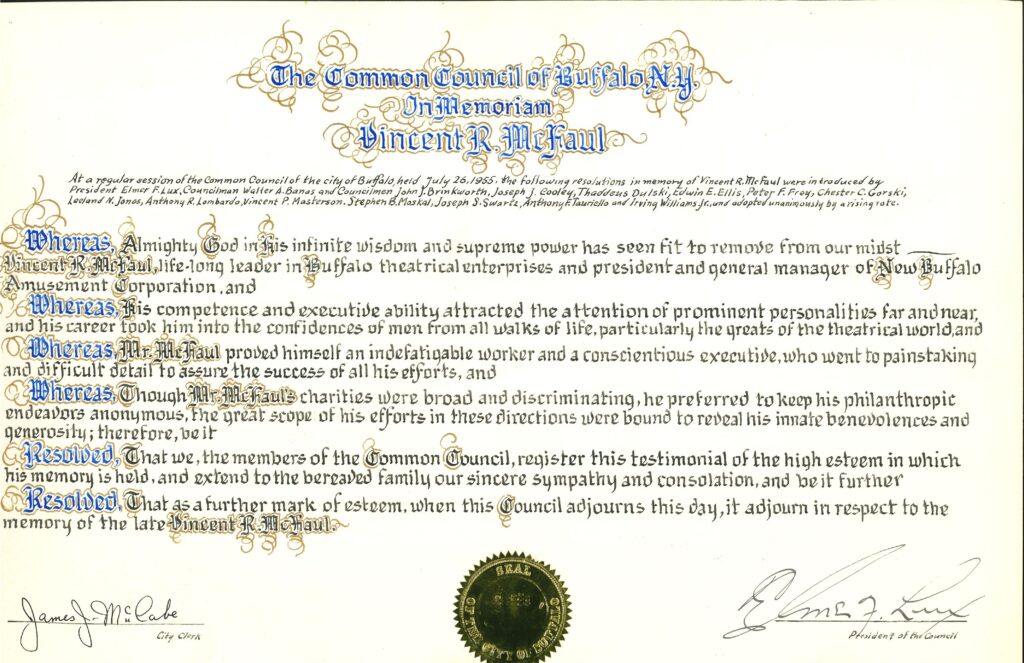
The Buffalo Common Council acknowledged Vincent McFaul's passing with great respect.
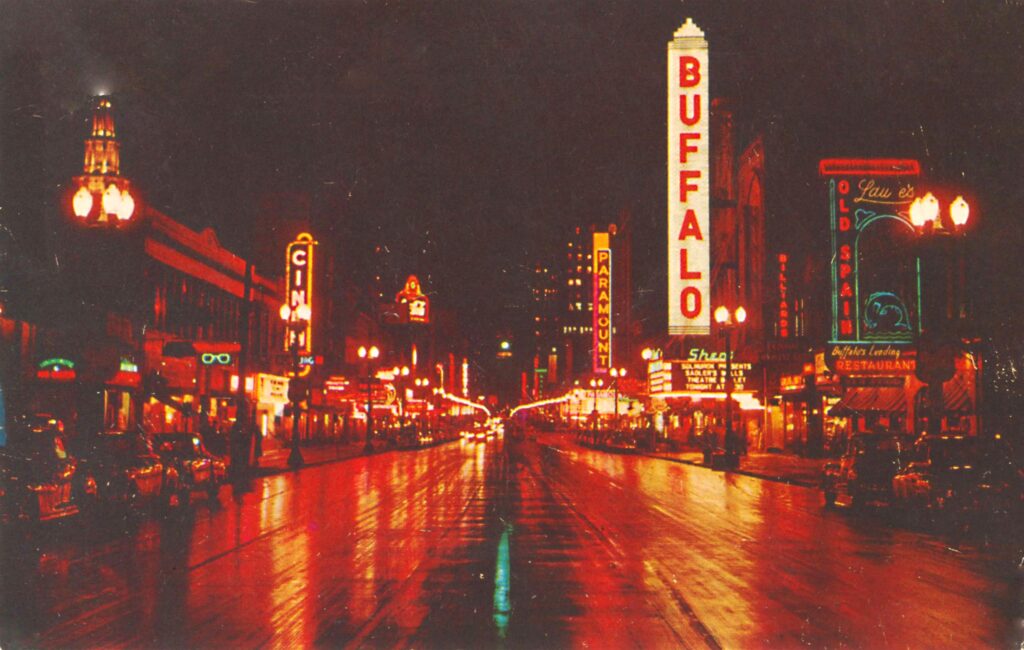
Main Street at night, 1950's
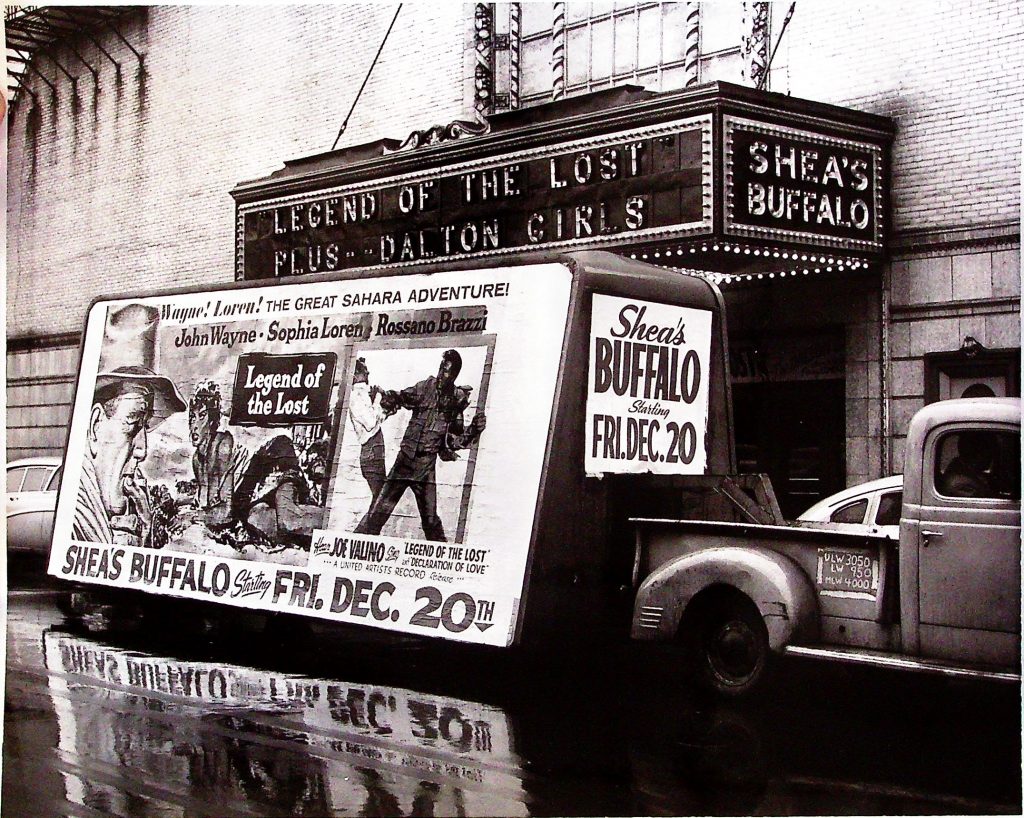
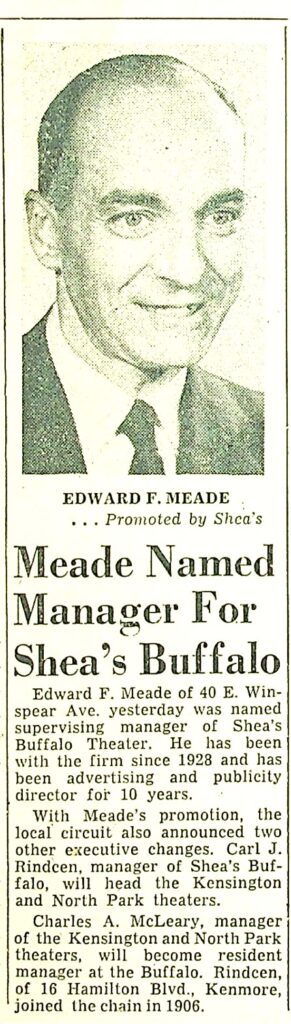
Ed Meade (1908 - 1988) was hired in 1928 to work for Shea's (then a chain of 13+ theatres) in its publicity-advertising department as Assistant Advertising Manager. By the late 1940's, after Michael Shea had died and Shea's Buffalo Theatre was managed by Loew's and Paramount Pictures, Ed Meade was now the Advertising and Publicity Manager, and would later by promoted to Supervising Manager (and eventually City Manager) of Shea's Buffalo from 1956 - 1961. Under Meade's guidance, Shea’s navigated both the highs of the golden age of cinema and the shifts in the industry, remaining a thriving hub for entertainment in Buffalo. Thanks to Ed, we have these firsthand historical archives of the advertising efforts being promoted by Shea's Buffalo Theatre throughout the 1950's from his personal scrapbooks, that were donated to Shea's Performing Arts Center by his family.
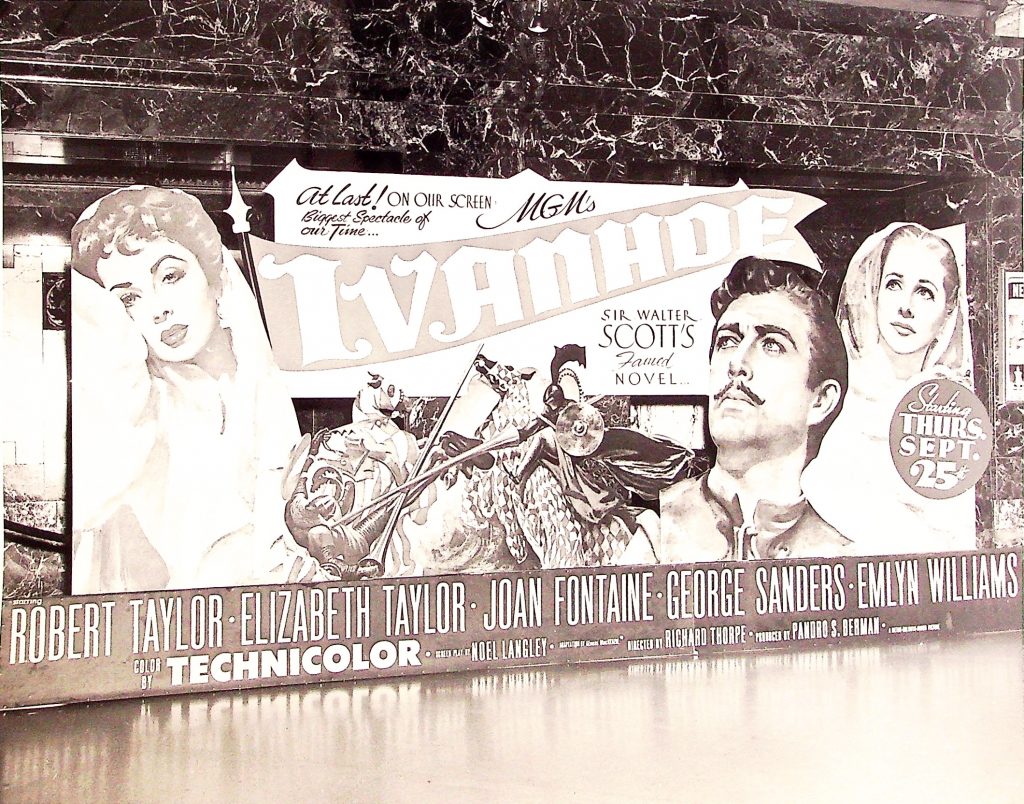
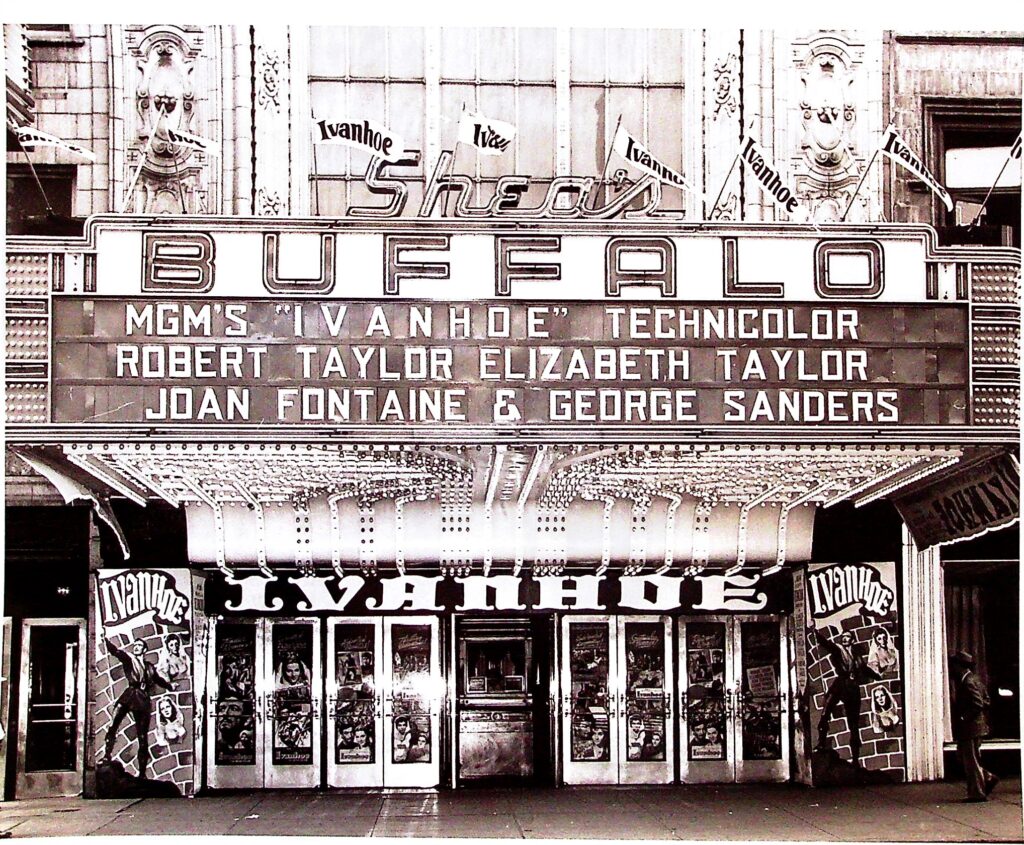
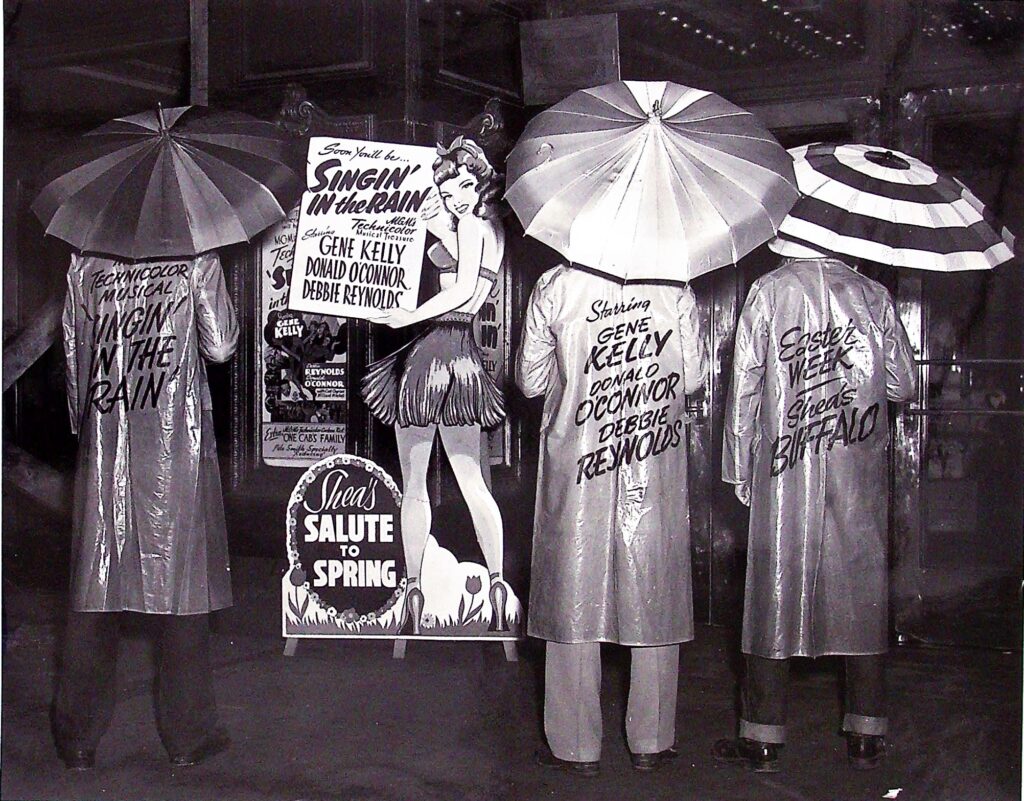
During the 1950's, Ed Meade embraced Hollywood promotional stunts tailored to the movie’s setting, including themed giveaways, models, and elaborate lobby displays.

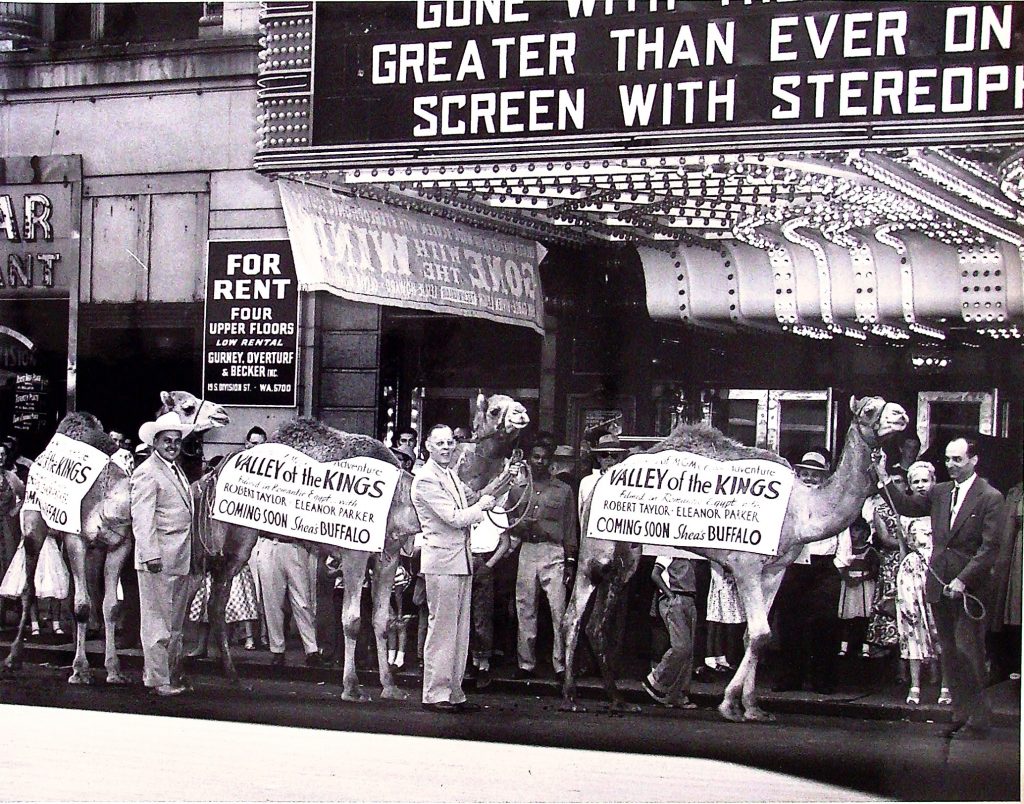
Shea's Buffalo Theatre pulled out all the stops to promote Valley of the Kings, bringing camels to Main Street to capture the spirit of ancient Egypt.
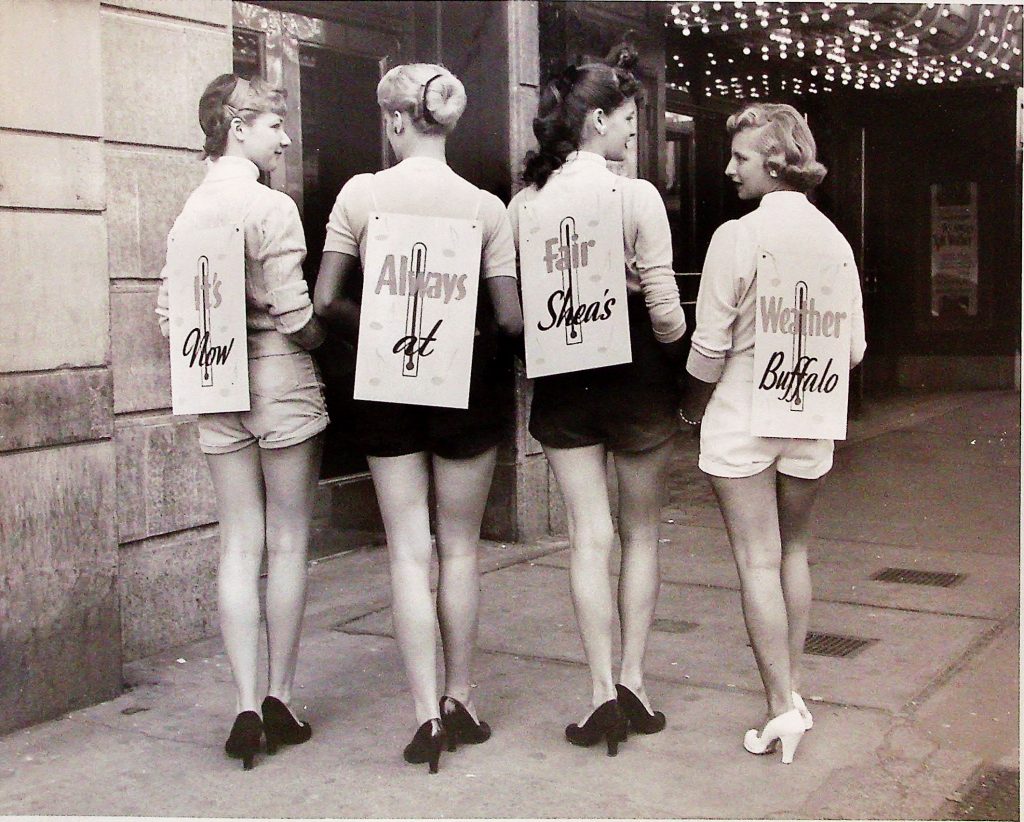
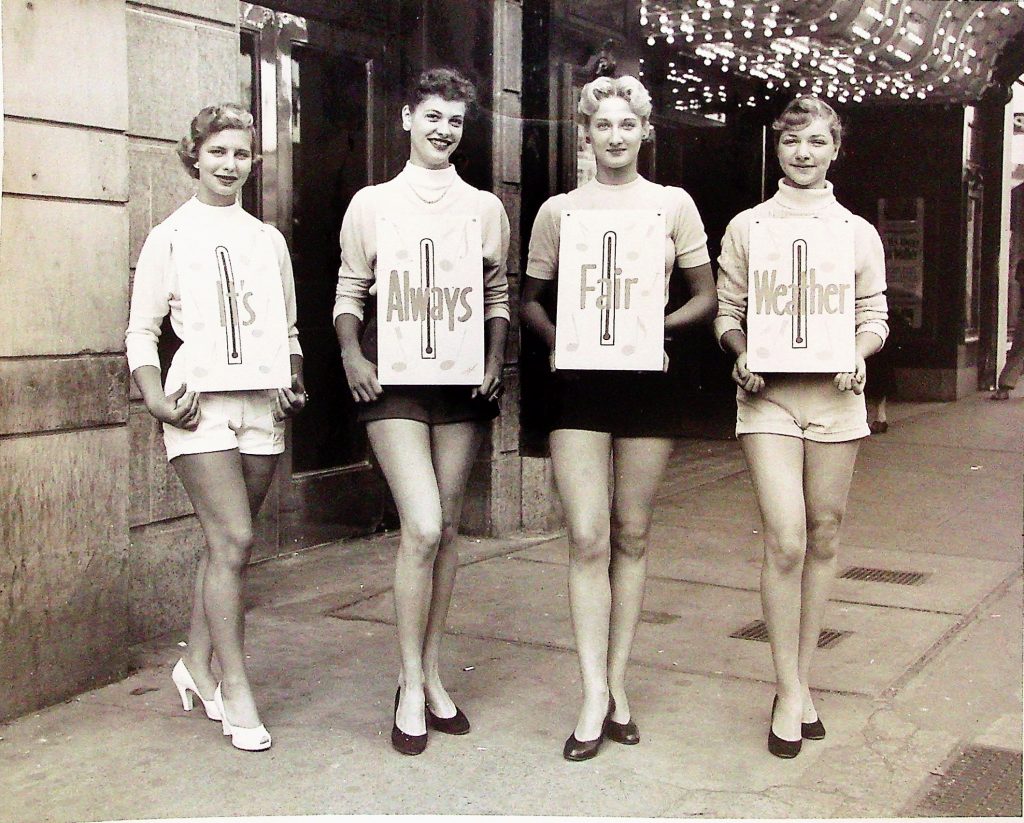
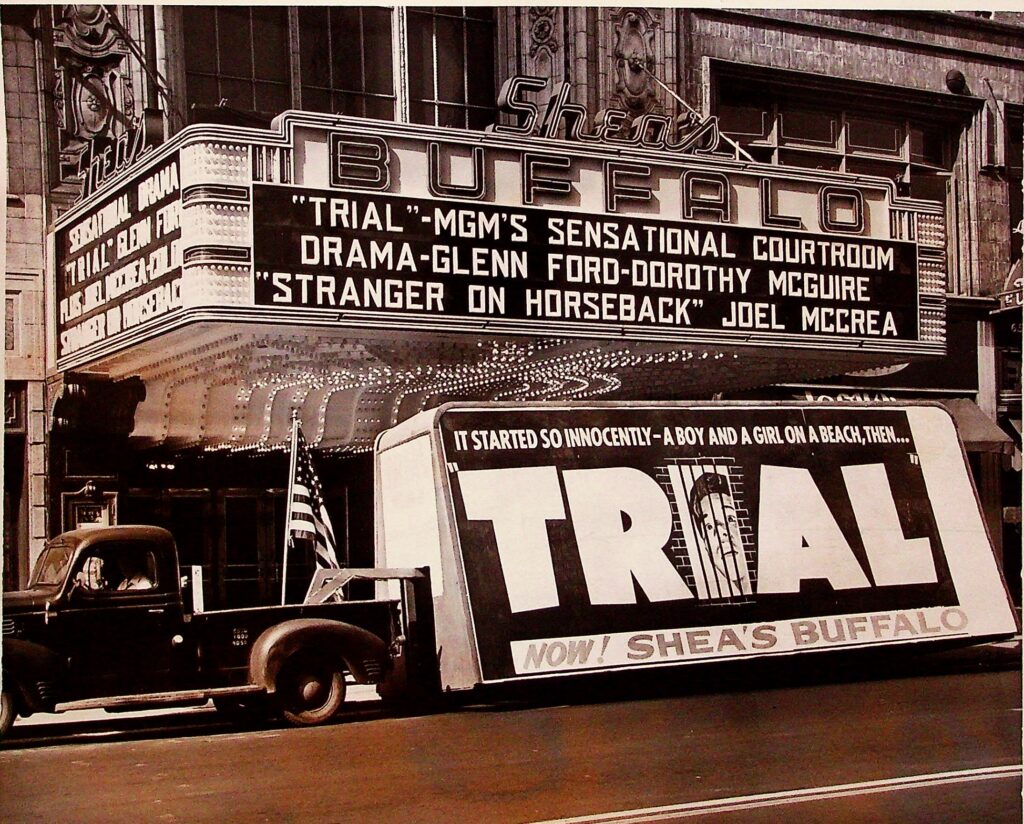
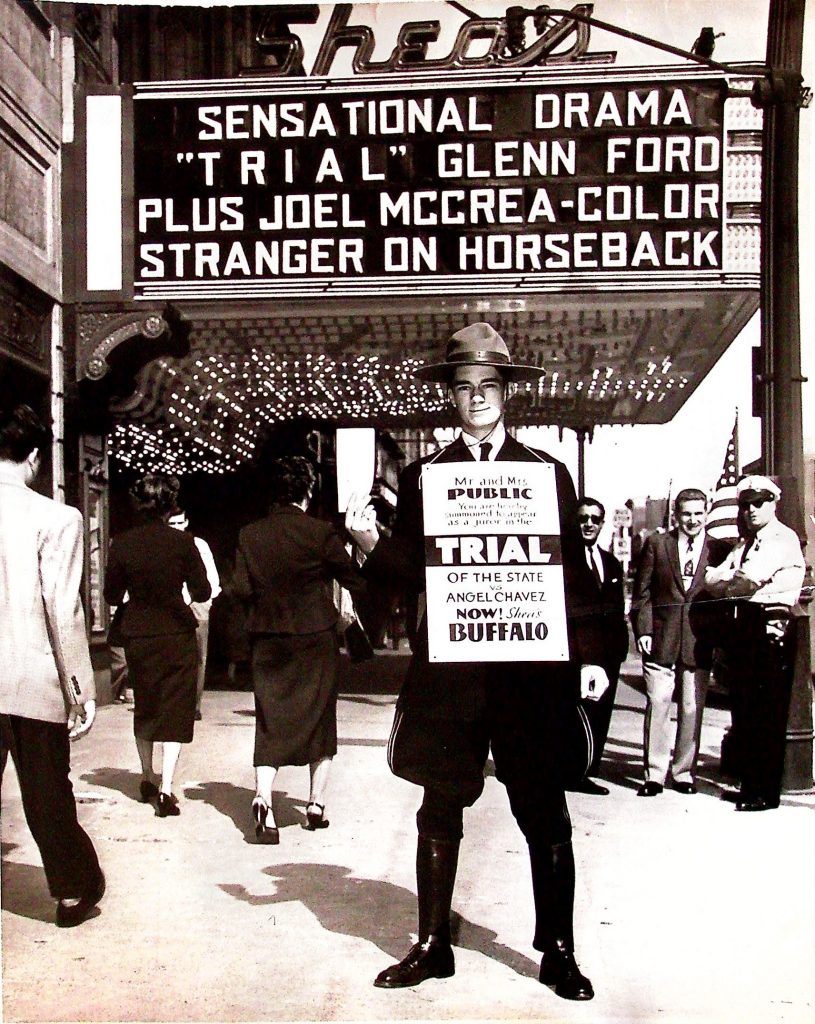
Promoting the courtroom drama Trial, Shea's Buffalo used street marketing stunts, like this character in a mock juror's outfit, inviting passersby to experience the suspense as part of the 'public jury.'
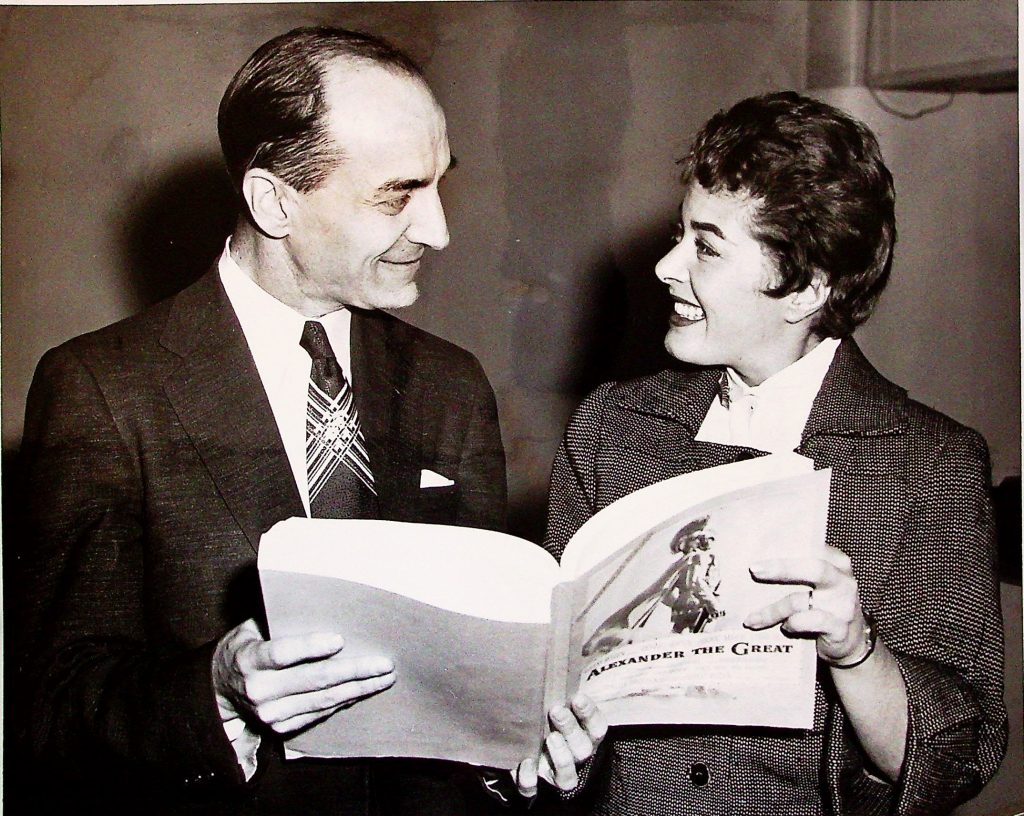
Preparing for the screening of Alexander the Great, Shea's City Manager Ed Meade shares a moment with the actress Miss Ramsey Ames.
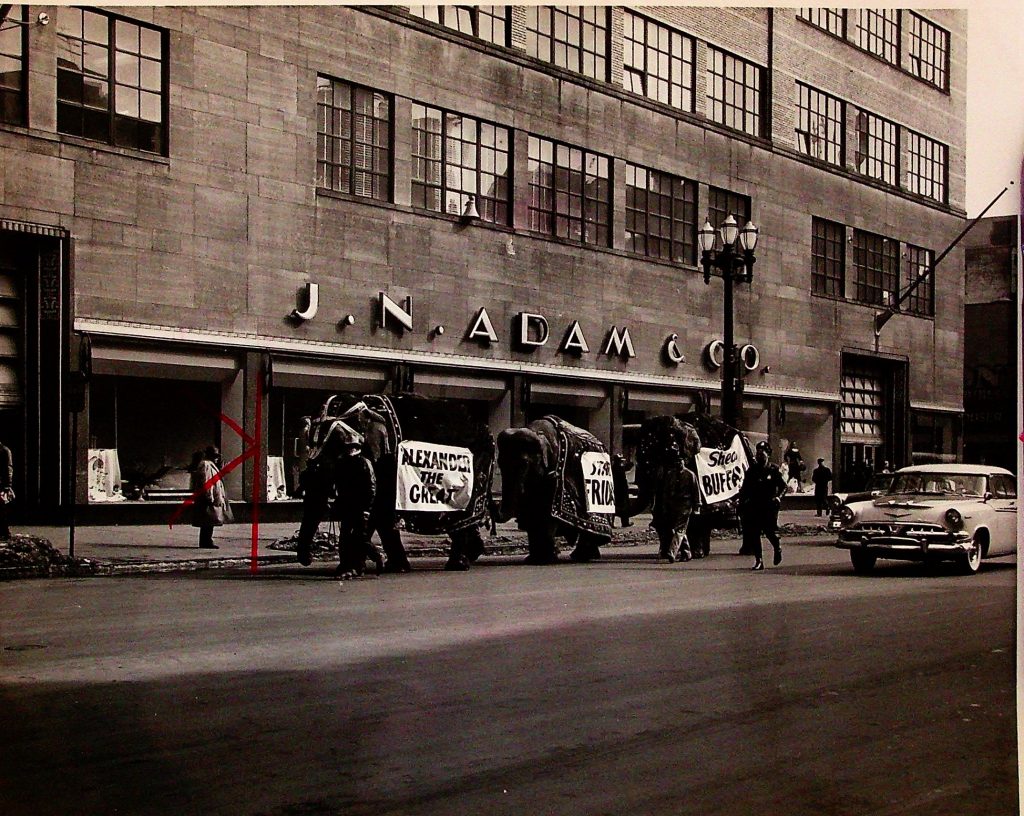
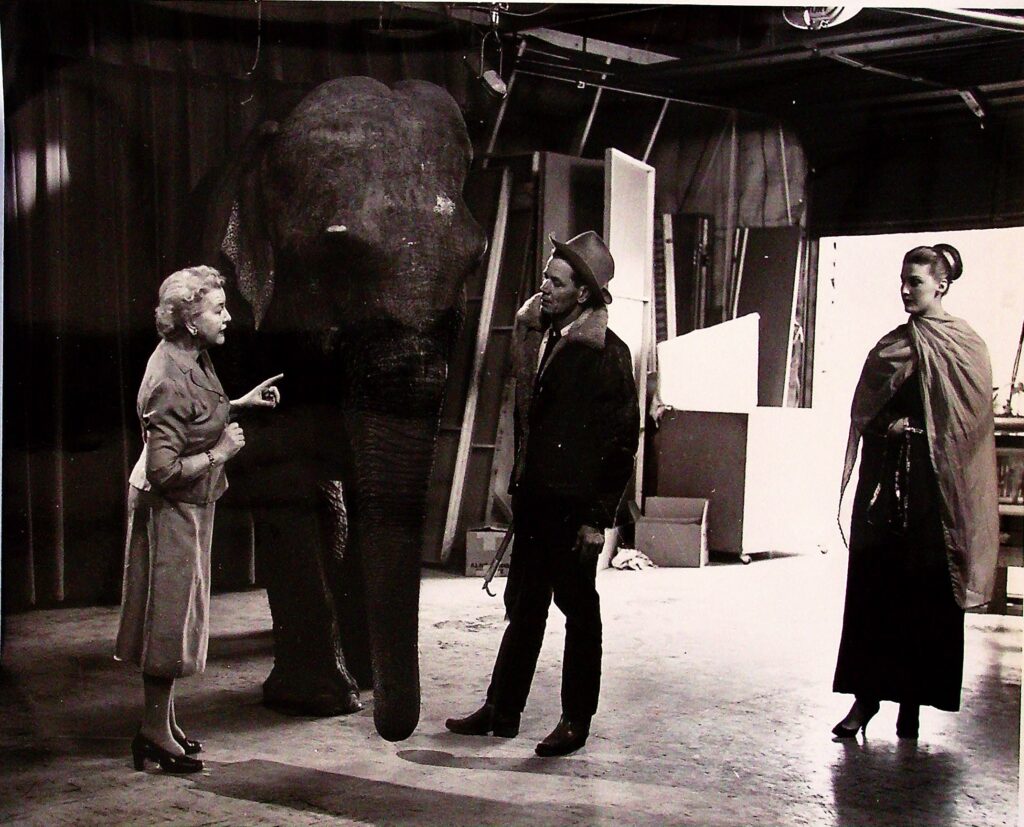

Photo Credit: The Buffalo News - March 26, 1956
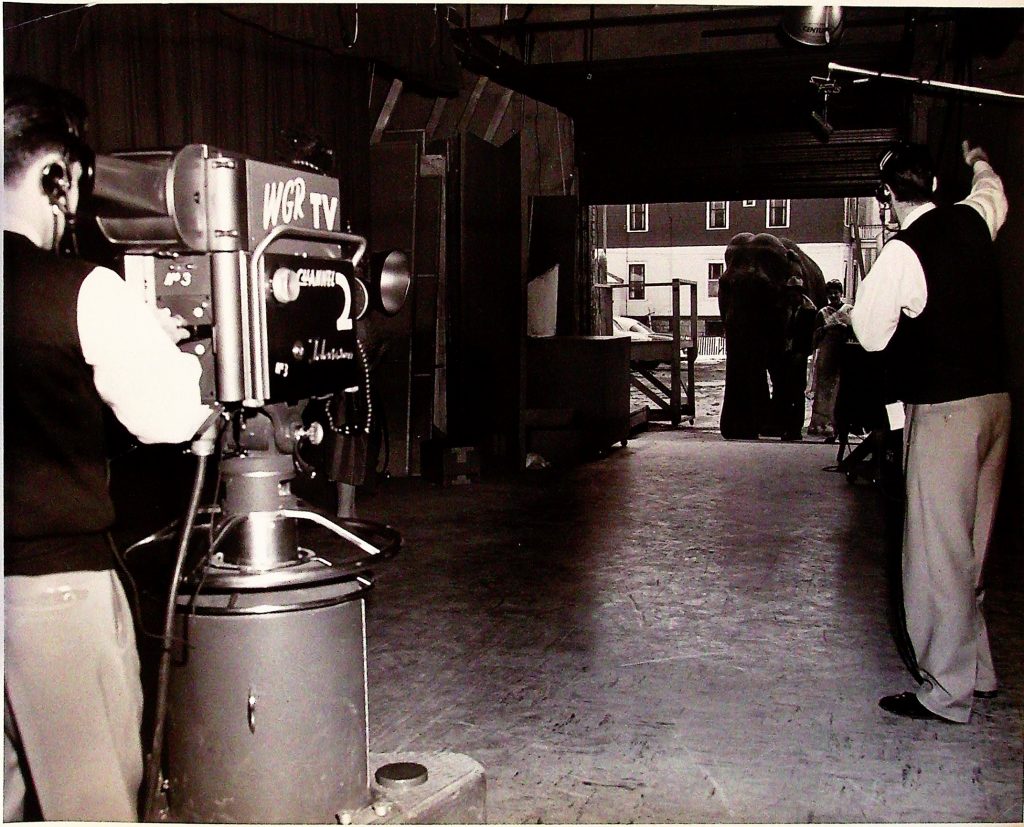
Behind the scenes filming of an elephant advertising for Alexander The Great at the WGR-TV studios on the Helen Neville show.
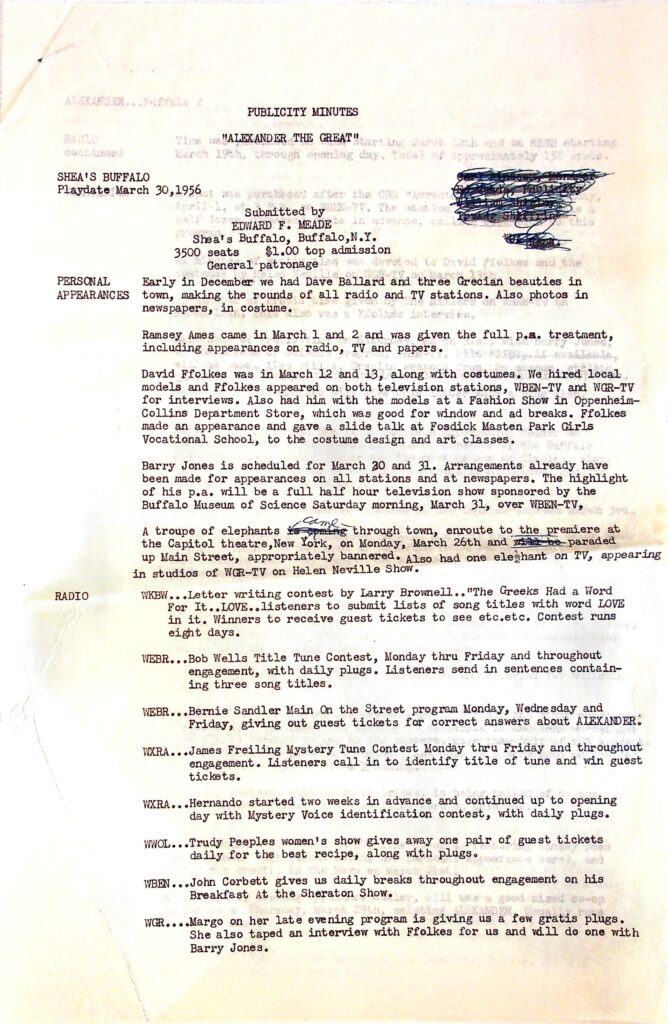
Marketing for the film Alexander The Great: Ed Meade's notes detail his elaborate publicity - including personal appearances by the actress Ramsey Ames, radio giveaways, study guides from the University of Buffalo given out to public high schools, an exhibition of Grecian wrestling, costume displays, and even a parade of elephants down Main Street!
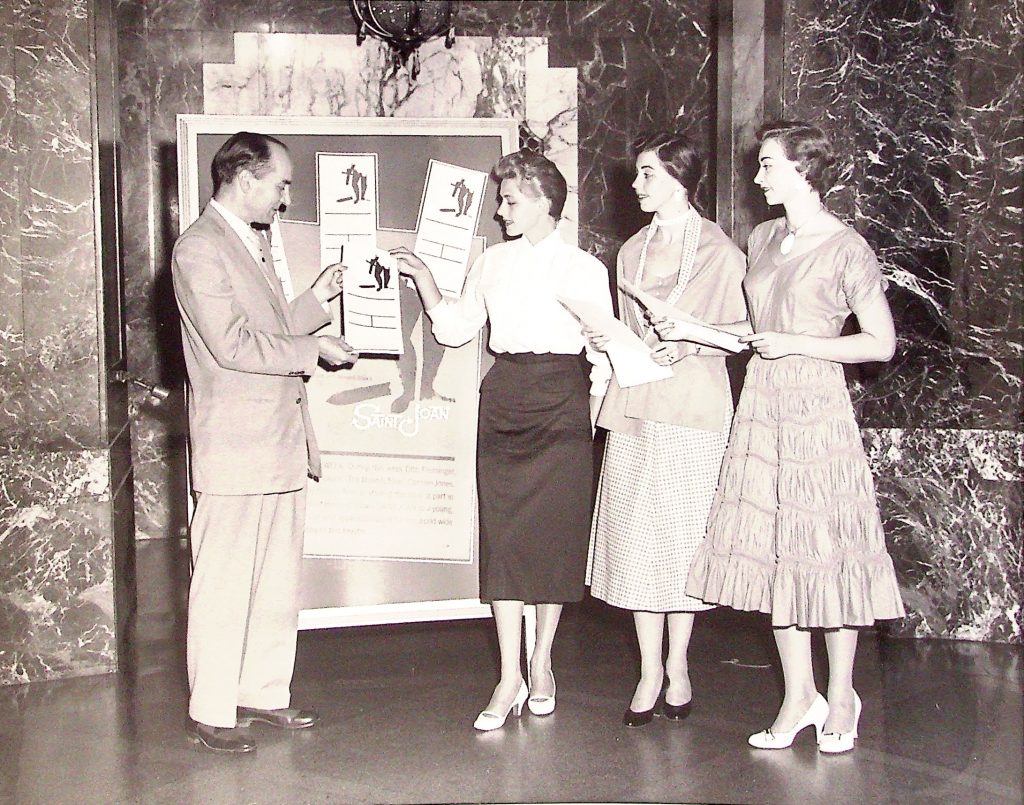
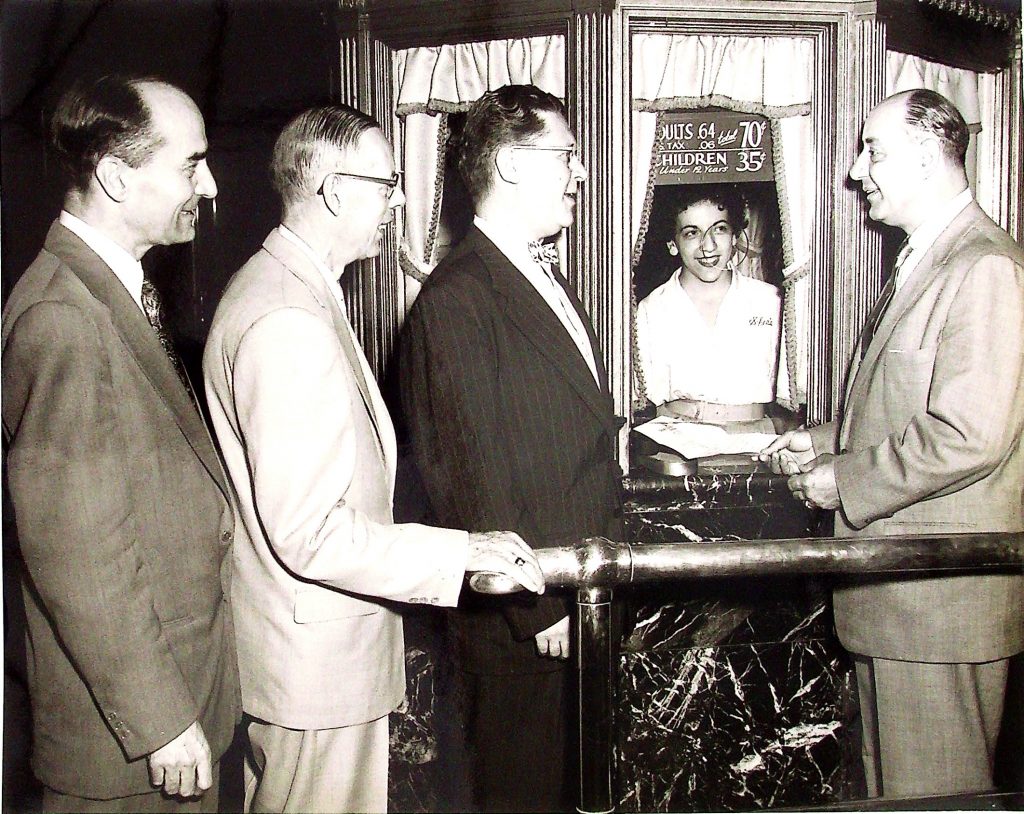
Note the ticket price - $0.70 for Adults and only $0.35 for Children!
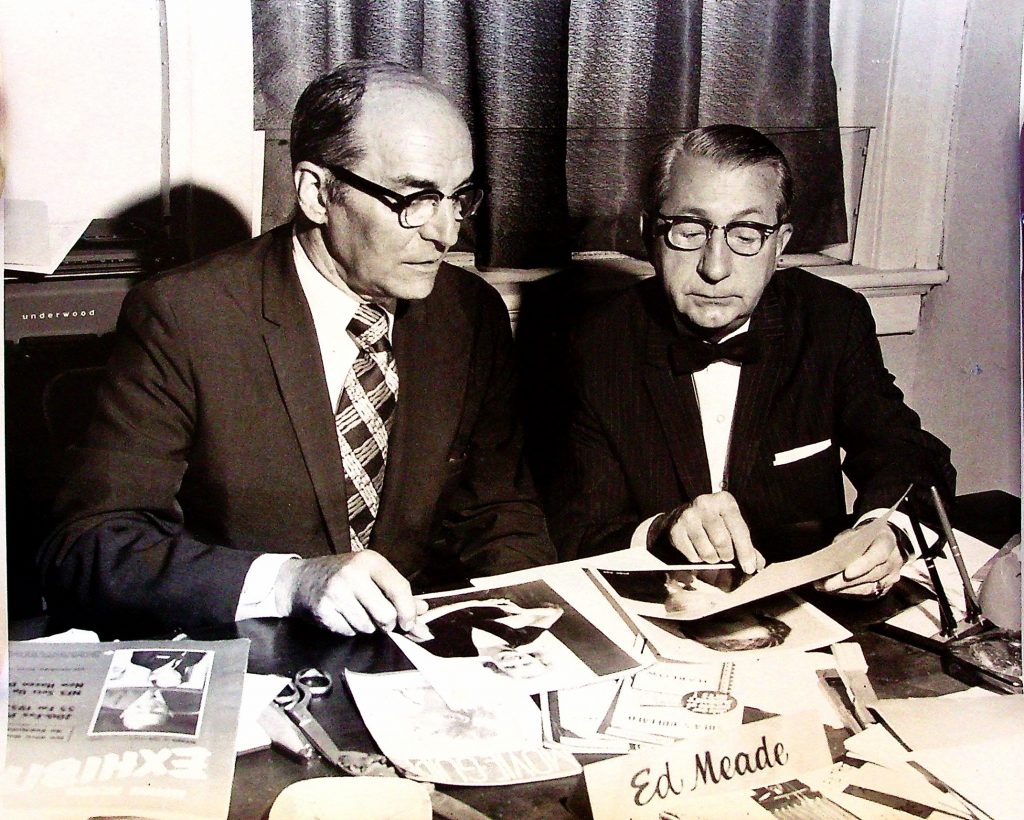
Ed Meade (left) and Ed Miller, were long-time friends and business associates. This photo was taken in Meade's advertising office in the Wurlitzer Building, looking over autographed photos of Hollywood stars who appeared in Buffalo theatres during their carees.
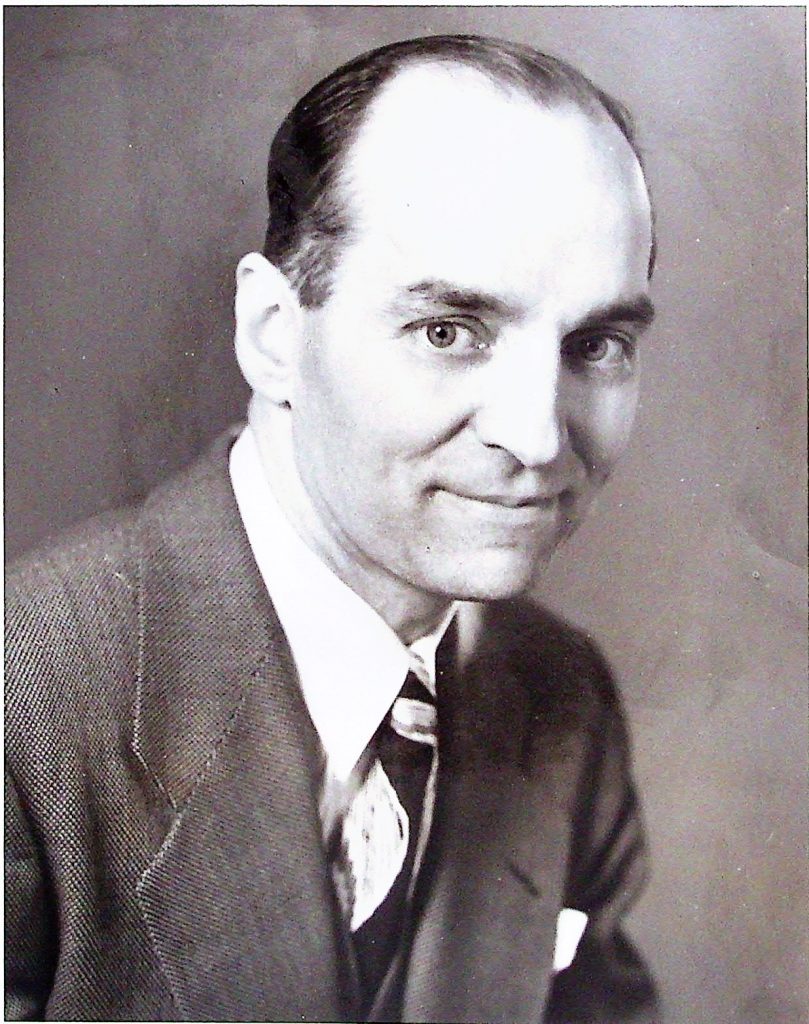
By the late 1960's, the likes of Michael Shea, Vincent McFaul, and Ed Meade were long gone, as were the old vaudeville shows and film studios. Now under the ownership of Loew's Theatres, Shea's Buffalo Theatre was falling into decline and disrepair. It was beginning to seem more and more likely that Shea's Buffalo Theatre would share the fate of the other Shea's theaters and would soon be demolished entirely...
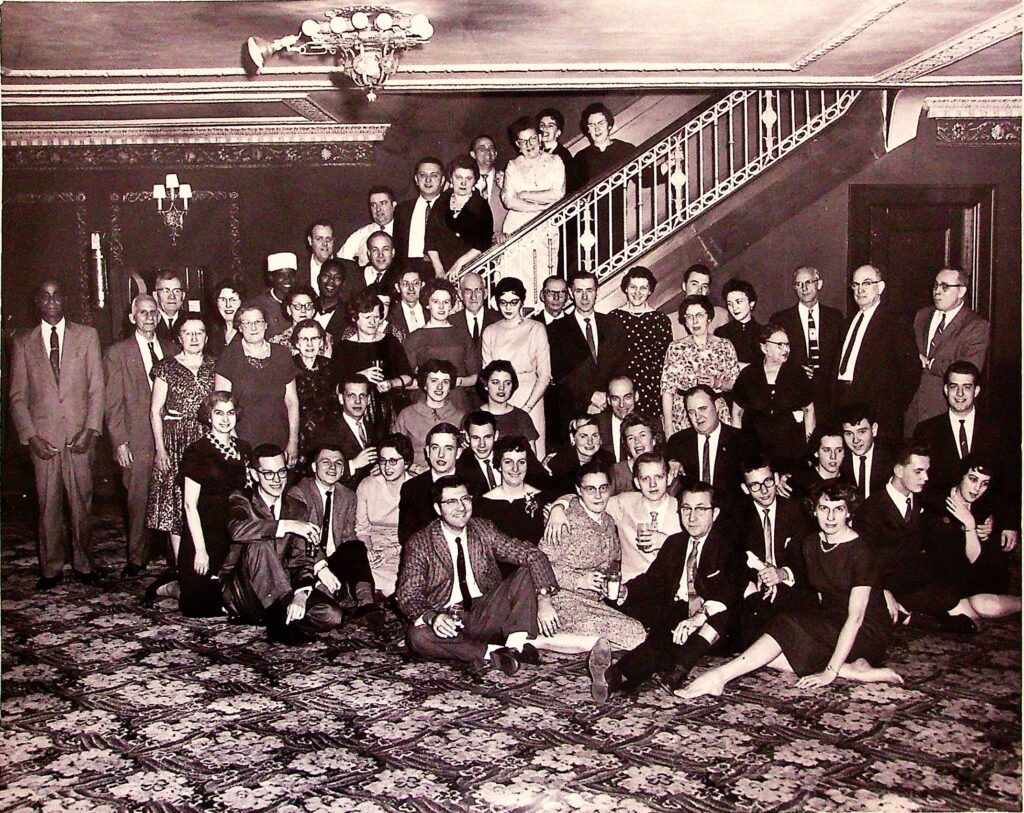
Photo Credit: December 1960
Shea's Buffalo Theatre employees posing for a picture during a Christmas party.
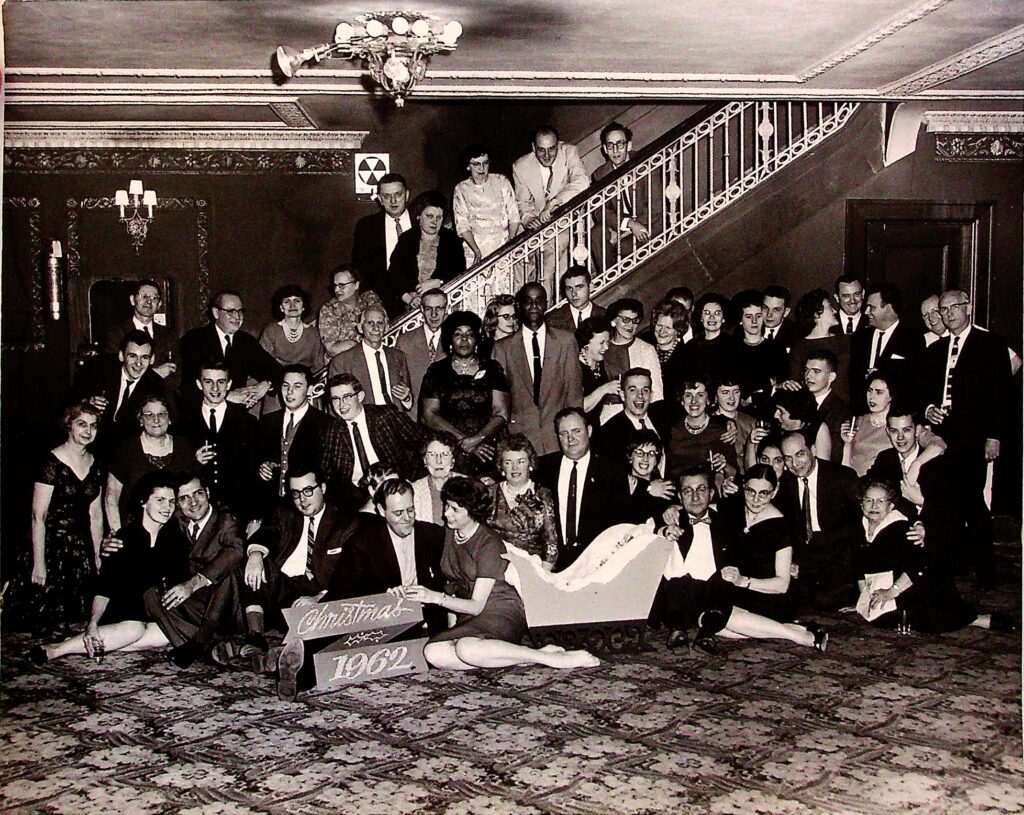
Photo Credit: December 1962
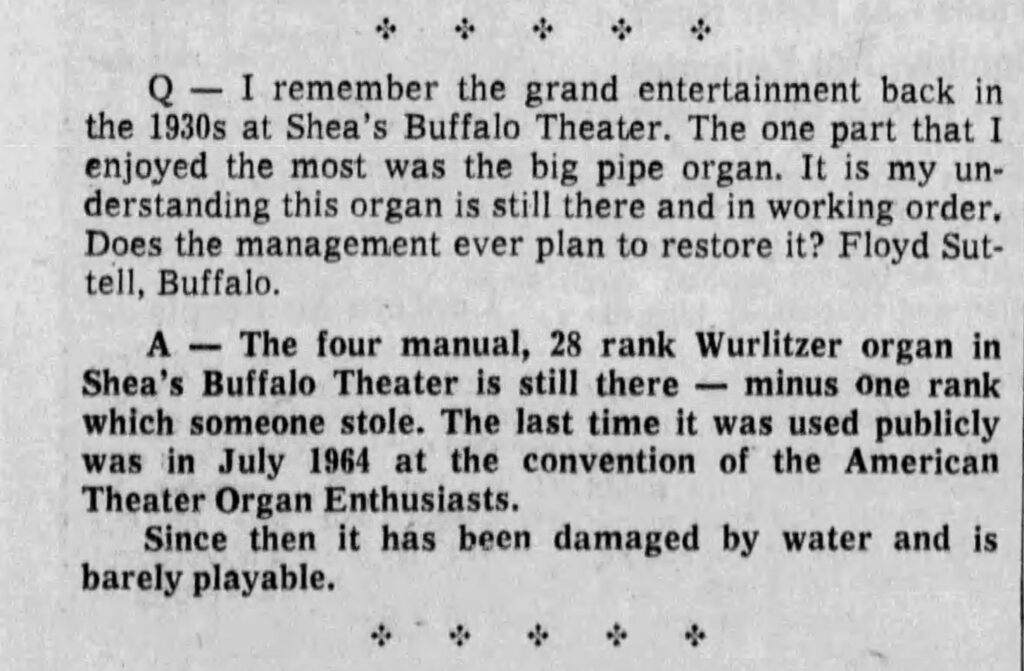
Photo Credit: The Buffalo News - March 19, 1969
The (not-so) Mighty Wurlitzer
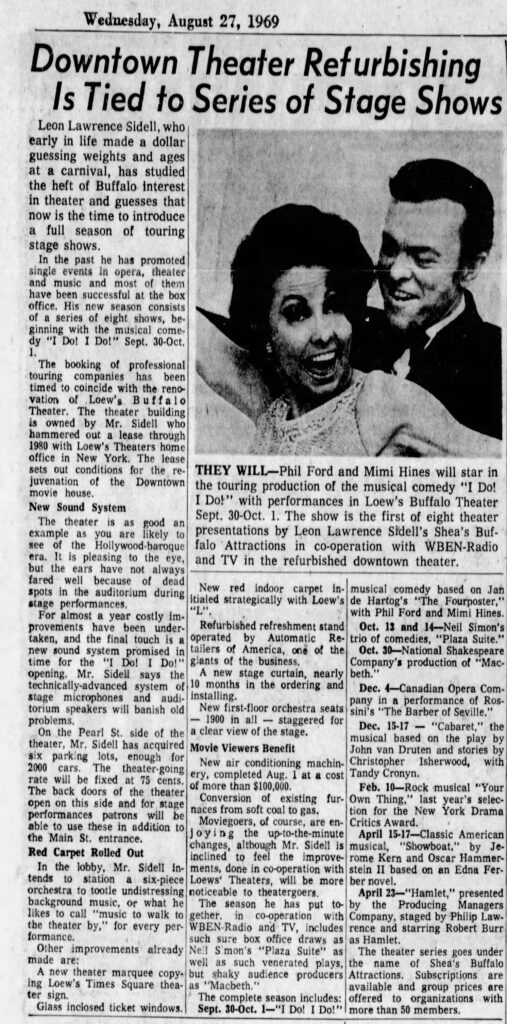
Photo Credit: The Buffalo News - August 27, 1969
Before Shea's Performing Arts Center had their Broadway Season, we had the Shea's Buffalo Attractions: in 1969, Loew's tried offering a subscription series for touring shows, including many touring Broadway productions like Fiddler on the Roof, Cabaret, Neil Simon's Plaza Suite, 1776. But Loew's had trouble with booking productions, with shows being cancelled and by July 1972, the Shea's Buffalo Attractions were no longer being offered.

Photo Credit: The Buffalo Courier - July 11, 1970

Photo Credit: The Buffalo News - June 4, 1975
"When was the last time you paid to see a movie at the Buffalo?"
"They shouldn't close her down. A lot of people - like black people - can't afford to go out there (to the suburbs) to see a show. There aren't too many shows left."
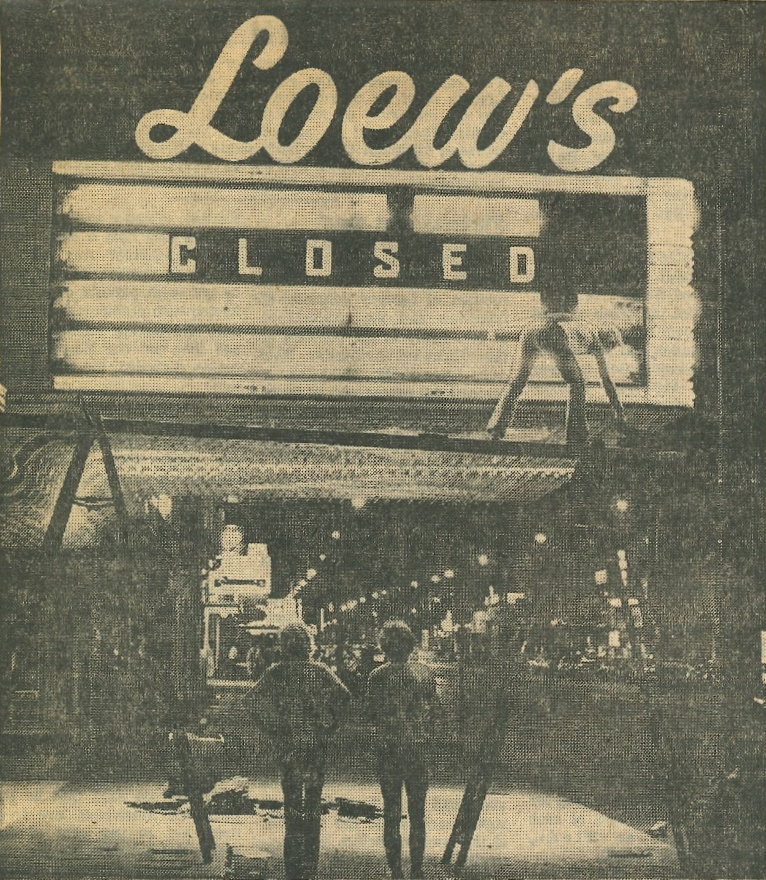
Photo Credit: The Buffalo Courier-Express