Back
20th Century Buffalo

20th Century Buffalo

100 years ago, Buffalo was the 8th most populous city in America and an immigrant ironworker from the First Ward would grow up to become the king of Main Street. As the world recovered from warfare, a global pandemic, and a presidential assassination in our city, the people would come to Shea's for entertainment and escape.

Immigrants and Millionaires

The success of Michael Shea, an Irish-Canadian immigrant of the First Ward growing up to become an acclaimed theatrical impresario is a rare, real-life example of the rags-to-riches story popularized in fiction when he was a boy. The city was home to 500,000 people, predominantly immigrant: Irish, Italian, Jewish, German, Polish, and even Black Americans joining the Great Migration north to start new lives in Buffalo.

At the turn of the twentieth century, Buffalo was at the industrial crossroads of American - between the Great Lakes and the Erie Canal, there were fortunes to be found in steel, flour, grain, and coal. Delaware Avenue became known as "Millionaire's Row" and the city was said to have more millionaires per square mile than any other U.S. city.
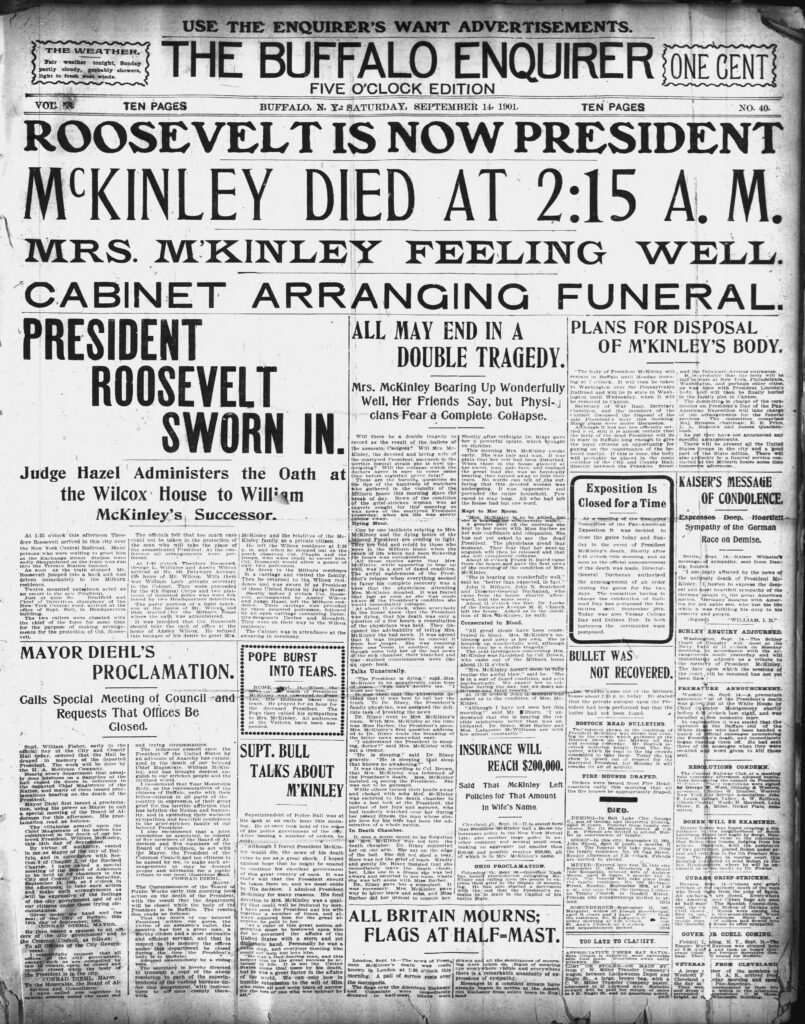
Twenty-five years earlier, President William McKinley was the target of an assassination at the Pan-American Exposition in Buffalo, NY. Although he survived the initial gunshot, McKinley died eight days later of infection, and Theodore Roosevelt was summoned back to Buffalo to be sworn in as our 26th President.

Photo Credit: The Buffalo Enquirer - September 14, 1901

Twenty-five years earlier, President William McKinley was the target of an assassination at the Pan-American Exposition in Buffalo, NY. Although he survived the initial gunshot, McKinley died eight days later of infection, and Theodore Roosevelt was summoned back to Buffalo to be sworn in as our 26th President.

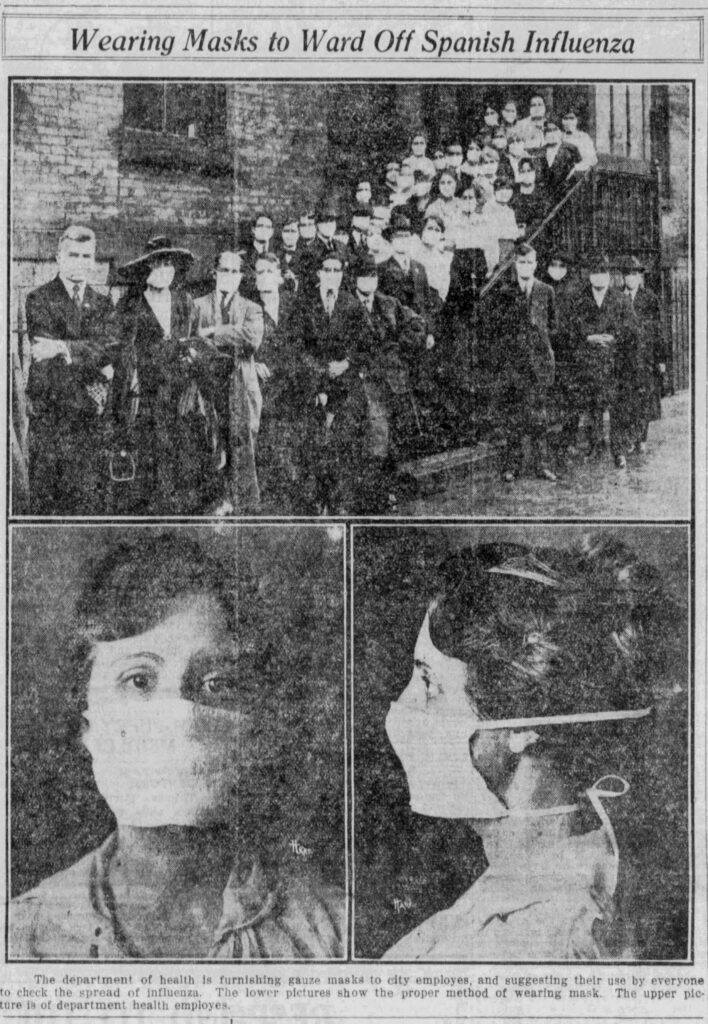
Photo Credit: The Buffalo News - October 12, 1918

The Great Influenza Pandemic

In 1926, Buffalo was still recovering from the pandemic of 1918-1920 that devastated the global population only six years earlier: an estimated half-billion people would be infected with influenza, with possibly as many as 100 million dying from the disease. Preventative measures such as masking and the closure of public spaces were carried out across the city - an eerie parallel to the COVID-19 pandemic to come a century later.

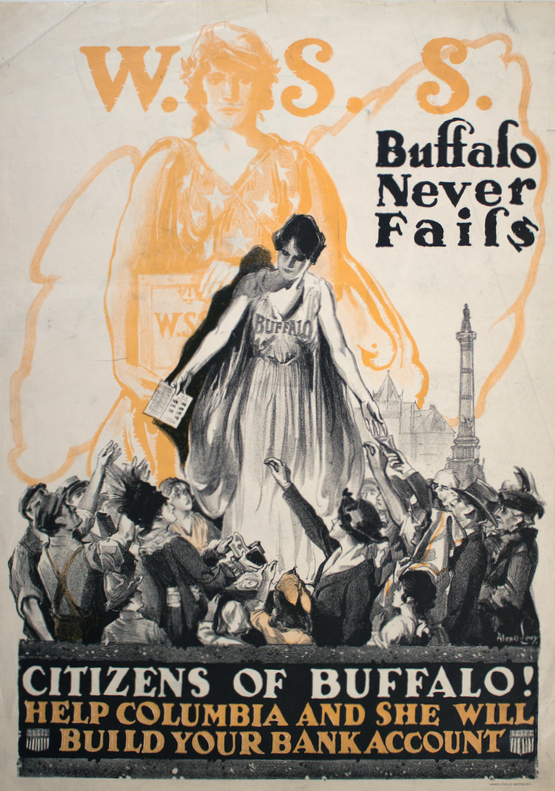
Photo Credit: Alex Levy - 1917; BECPL Digital Collection

The Great War

The Great War, as it was known before the second world war, was the first truly global devastation of warfare. While the United States wouldn't join the Allied side until 1917, propaganda posters were quick to urge Americans to do their part. Local artists created clever slogans like "Buffalo Never Fails" and "Buffalo Will See It Through" to urge people to support the war.

While the Great War ended in 1918, the horrors of warfare was not over yet: out of 9 million combatant and 7 million civilian casualties, nearly a thousand of those deaths were Buffalonians. Many of the surviving soldiers were stigmatized, suffering from physical and mental wounds - the new disease of "shell-shock" (now known as post-traumatic stress disorder or PTSD) was commonly censored by the Allied armies. Although PTSD has been identified as far back as 1300 B.C., it would not become a medical diagnosis until 1980.

Buffalo, NY in 1926

Aside from Shea's Buffalo Theatre, there are a few other Buffalo institution as old as us:
  • Our Lady of Victory Basilica - May 25, 1926
  • Buffalo Municipal Airport (now Buffalo Niagara International Airport) - September 25, 1926
  • The Buffalo Common Council - November 2, 1926
  • The Peace Bridge (while construction began in 1925, it was not opened until 1927)