Back
Back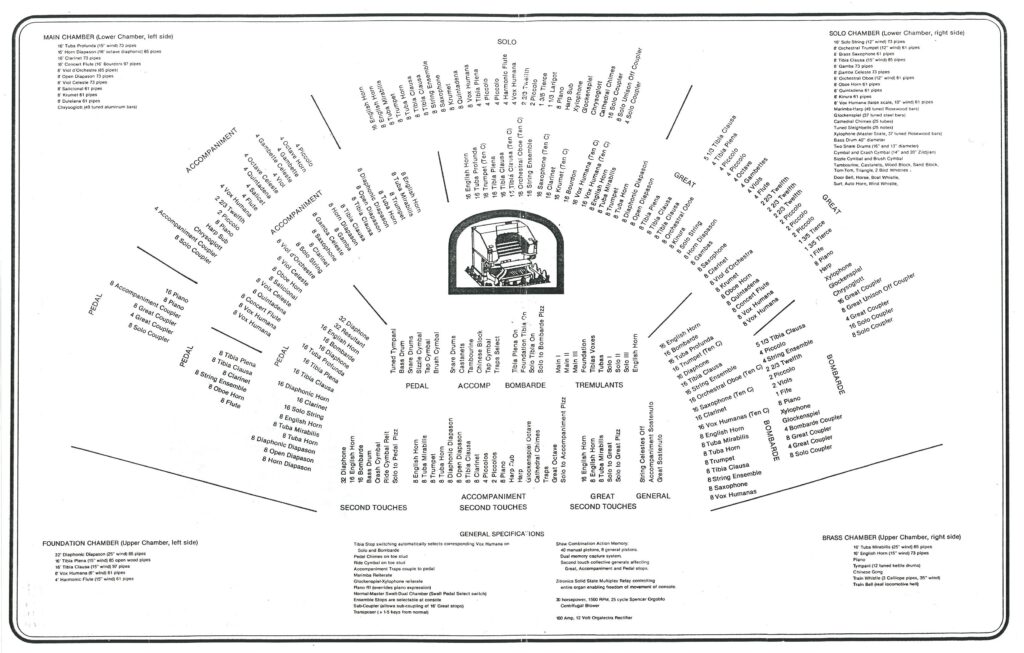
All the Bells and Whistles!
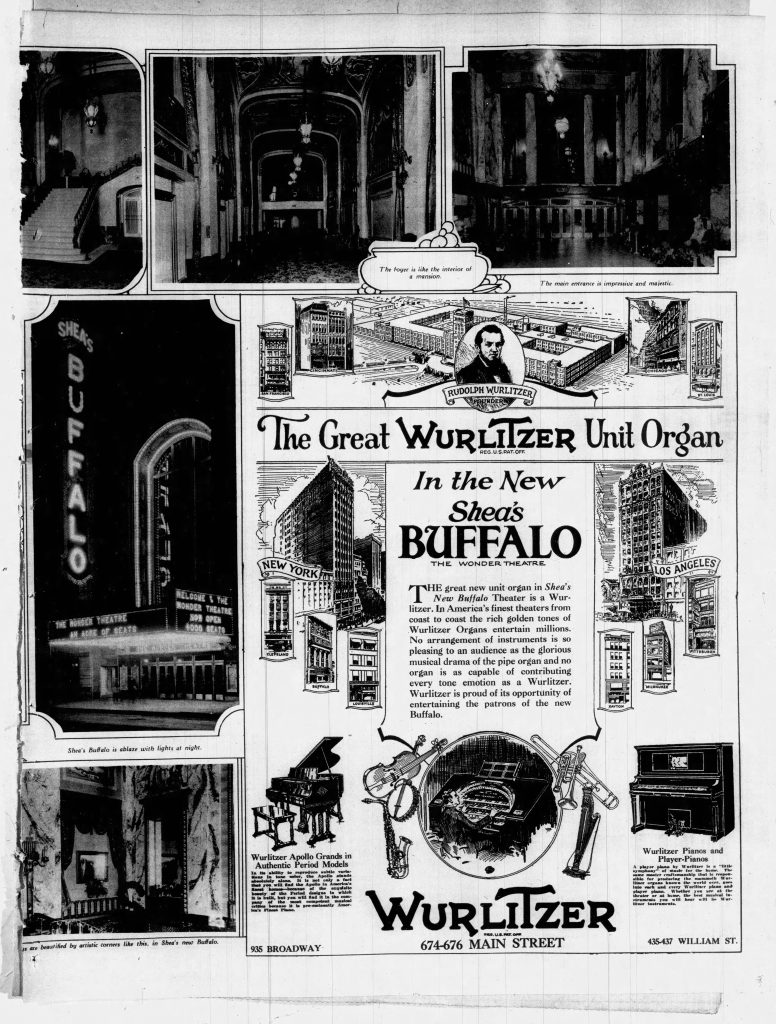
Michael Shea loved strings and the Buffalo instrument contains seven ranks of them, quite a large number for an organ of this type. The pedal organ is one of the largest to be found anywhere with twelve ranks of its own. Among the exceptional ranks of pipes is a gorgeous-sounding sixteen foot tibia plena. The smallest pipe is no bigger than a pencil while the largest of the pedal pipes are thirty-two-feet long, huge enough for a good-sized man to sit in. Virtually every instrument is a symphony orchestra is represented in this organ and when full organ is played it sounds very much like a complete orchestra. The massive instrument is located in six large chambers ,three of each side of the theater. It contains a complete set of percussion stops, commonly known as the "toy counter". Included in this section is a large xylophone, marimba, harp, chimes, cymbal, kettle, snare and bass drums, orchestra bells plus the usual array of sounds that were initially used to accompany silent films - auto horn, boat whistle, Chinese gong, bird whistle, etc. Sitting in the lower box on the right hand side of the stage is a large grand piano which is played from the organ console.